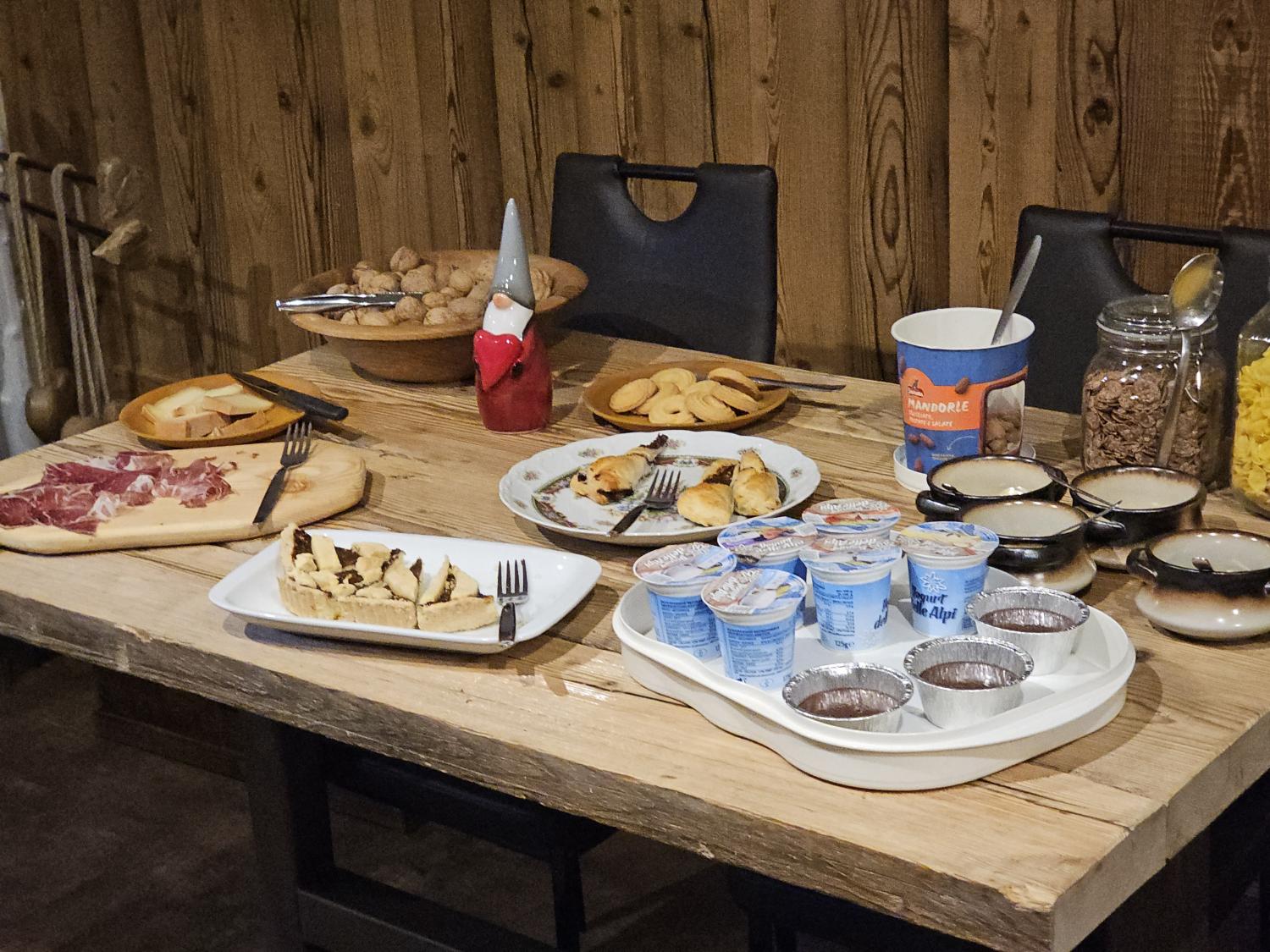
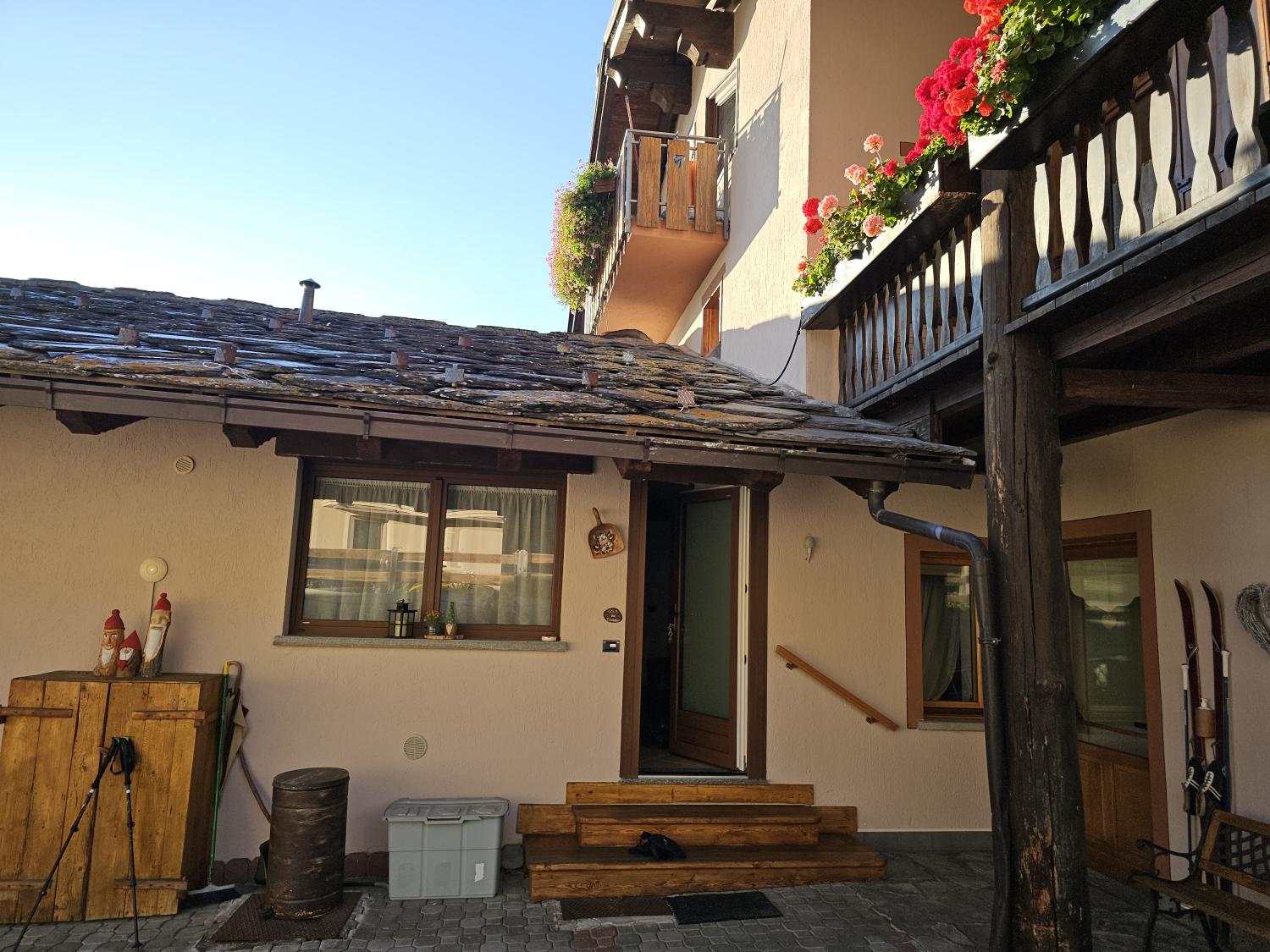
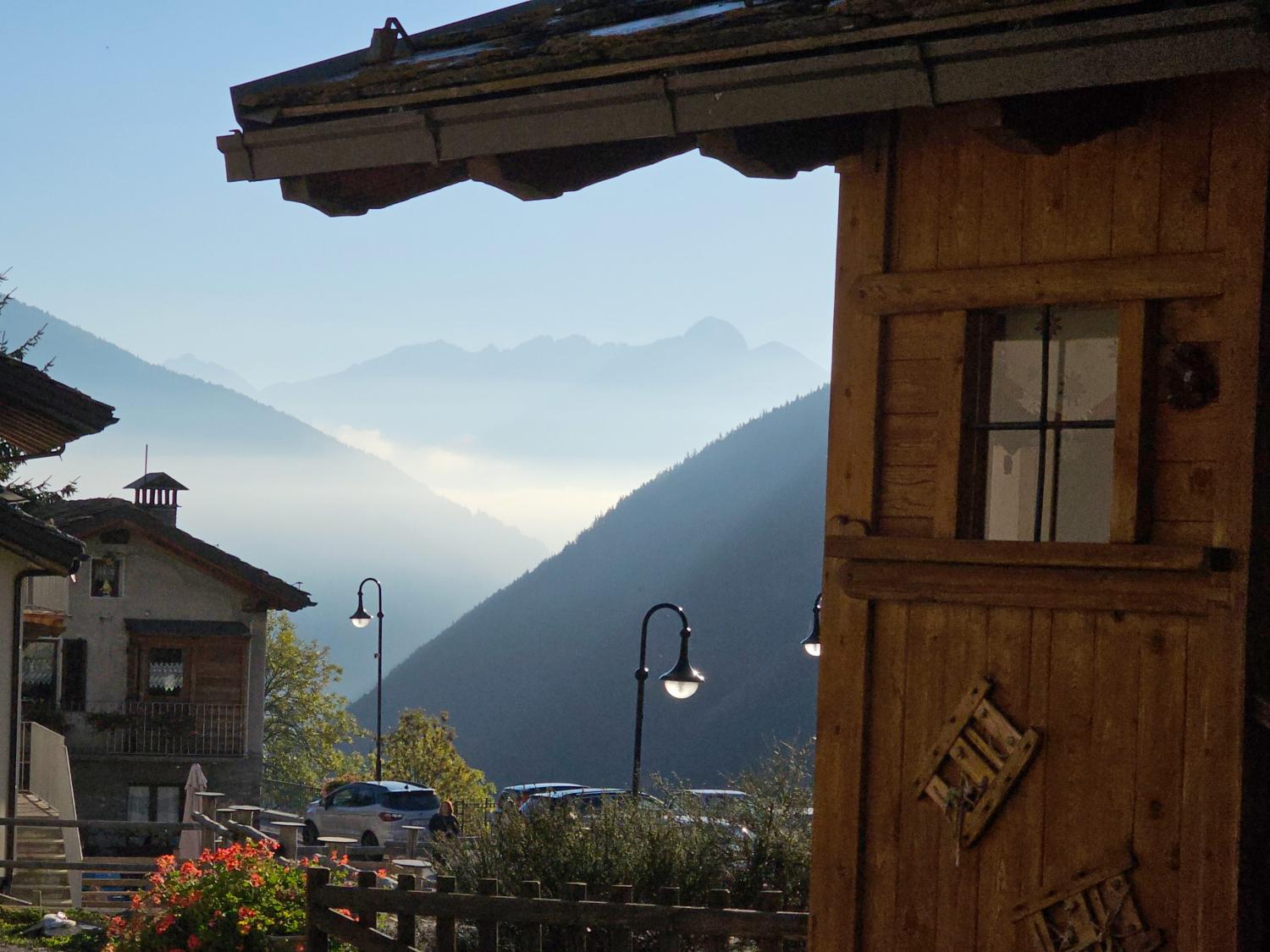
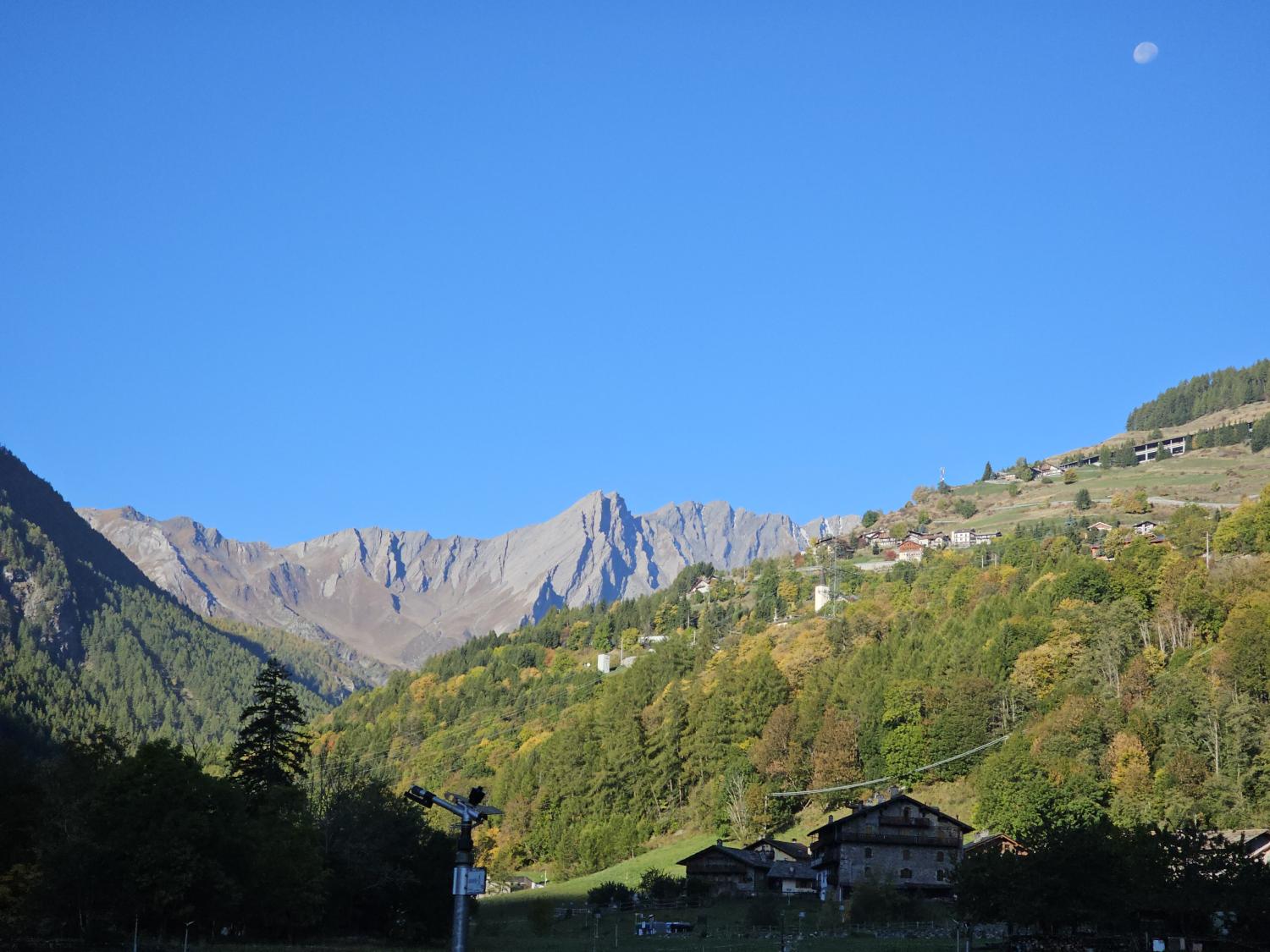
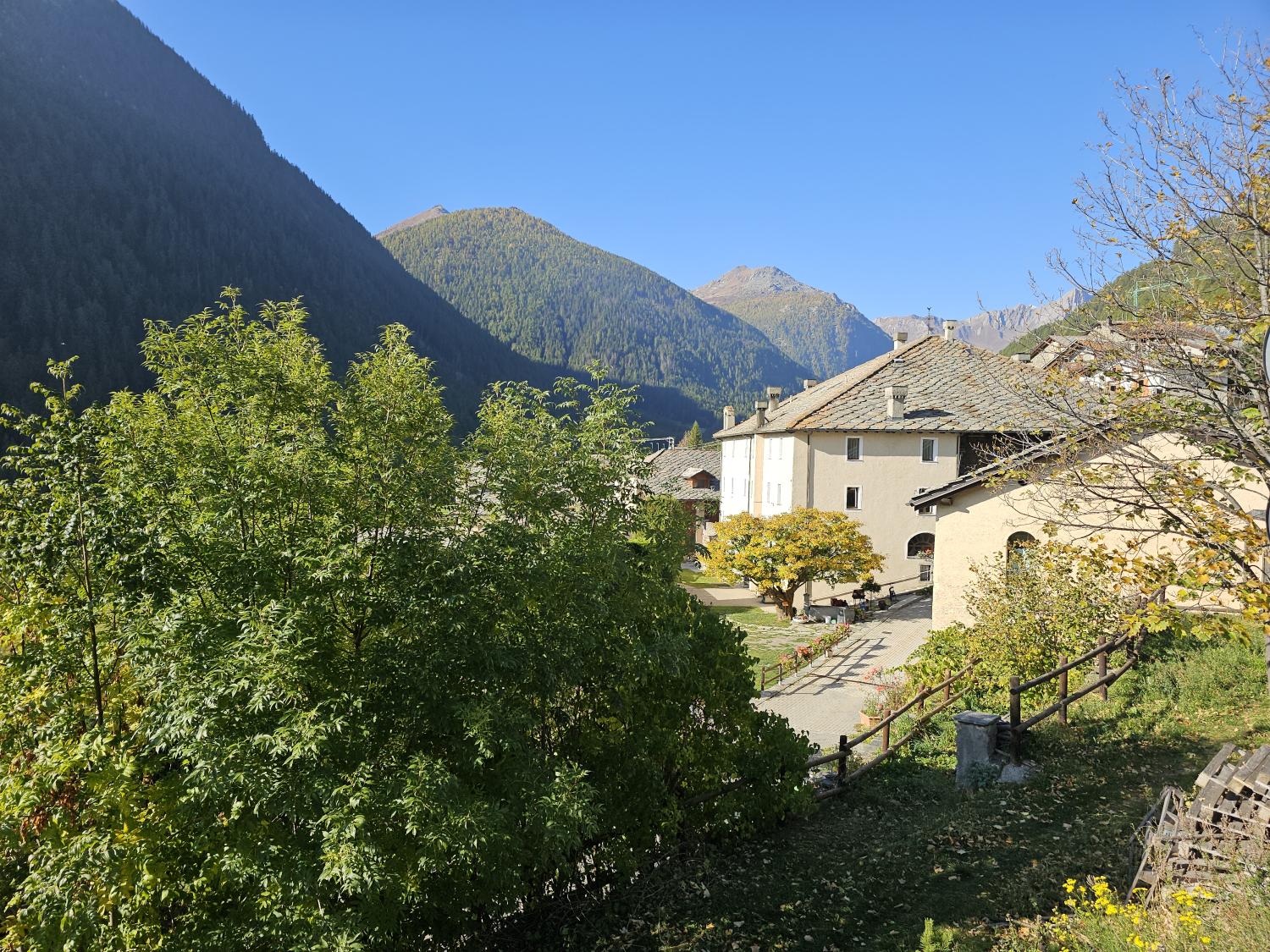
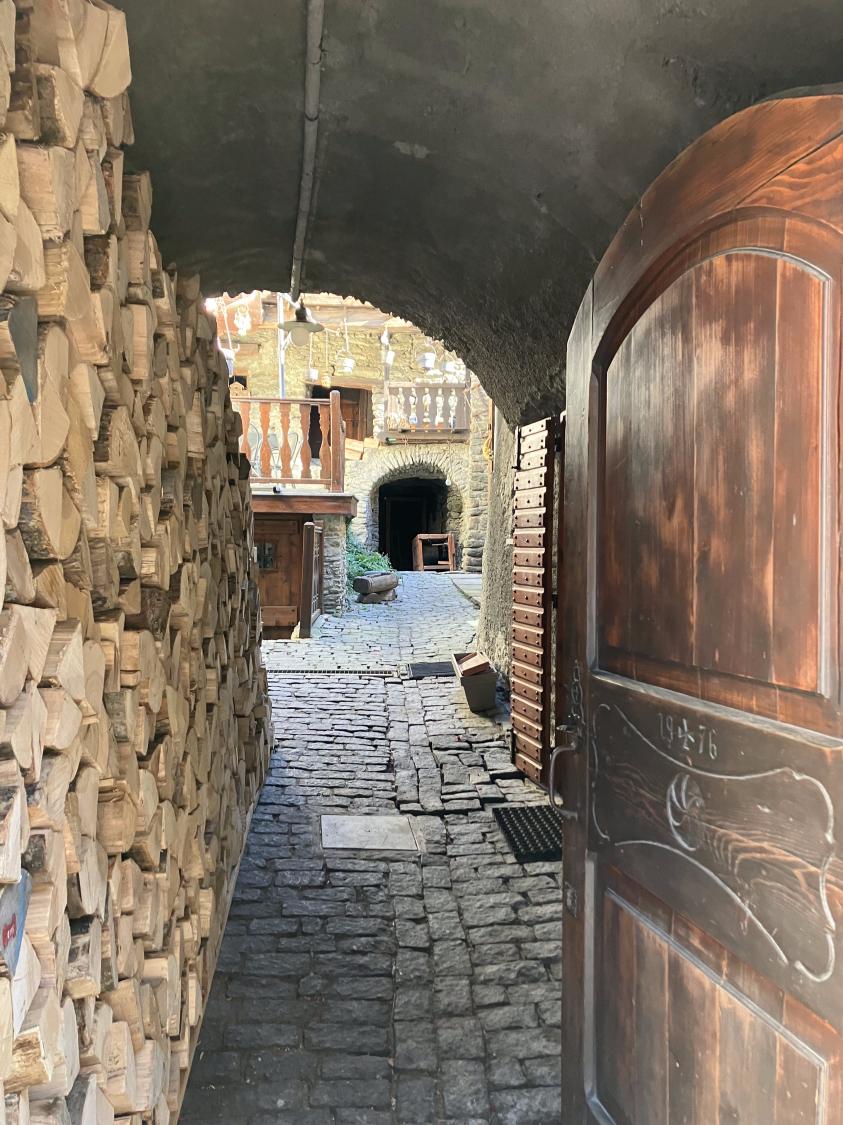
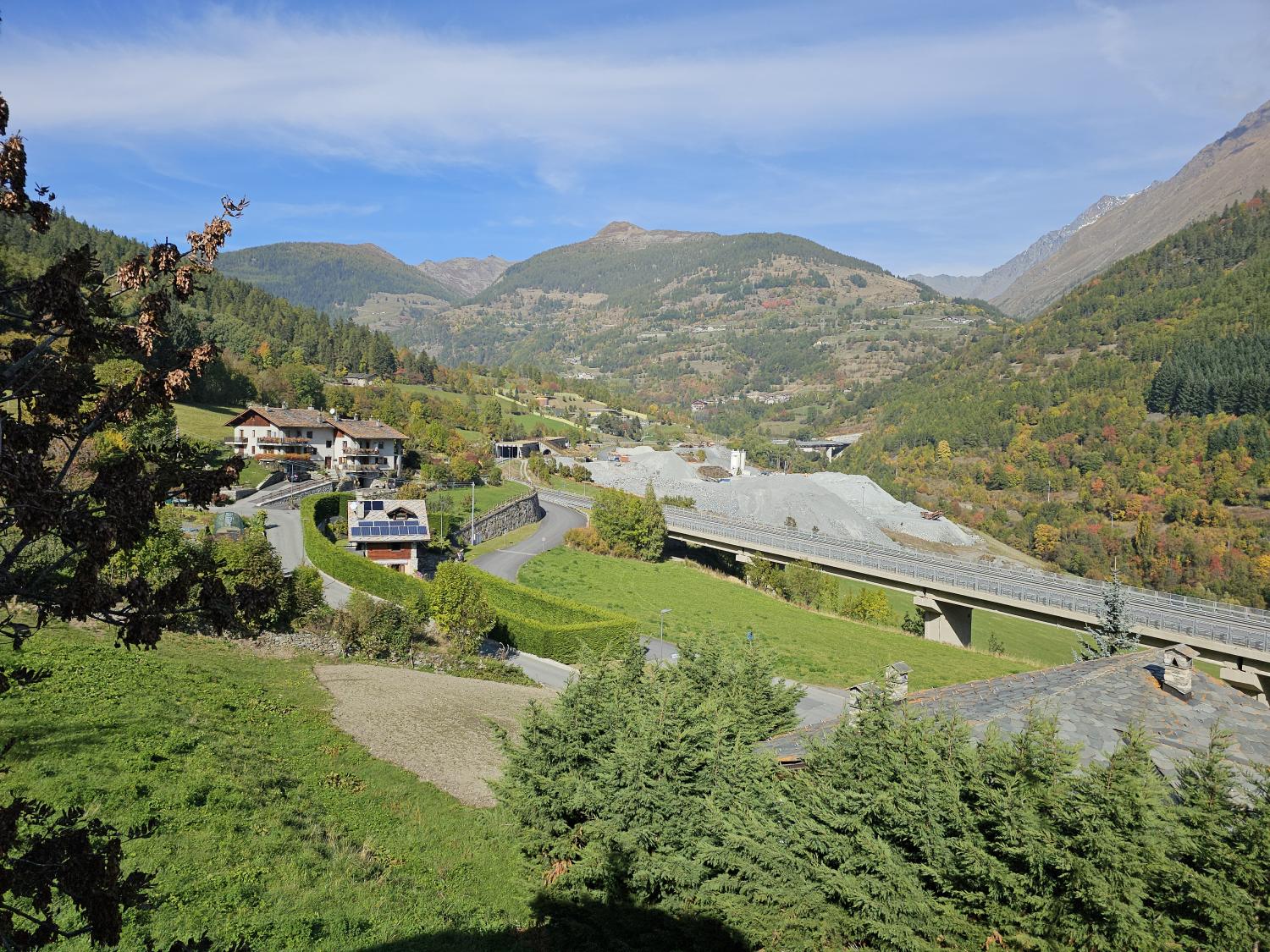
After a hearty breakfast in the cellar of the building with our B&B apartment, we set off downhill
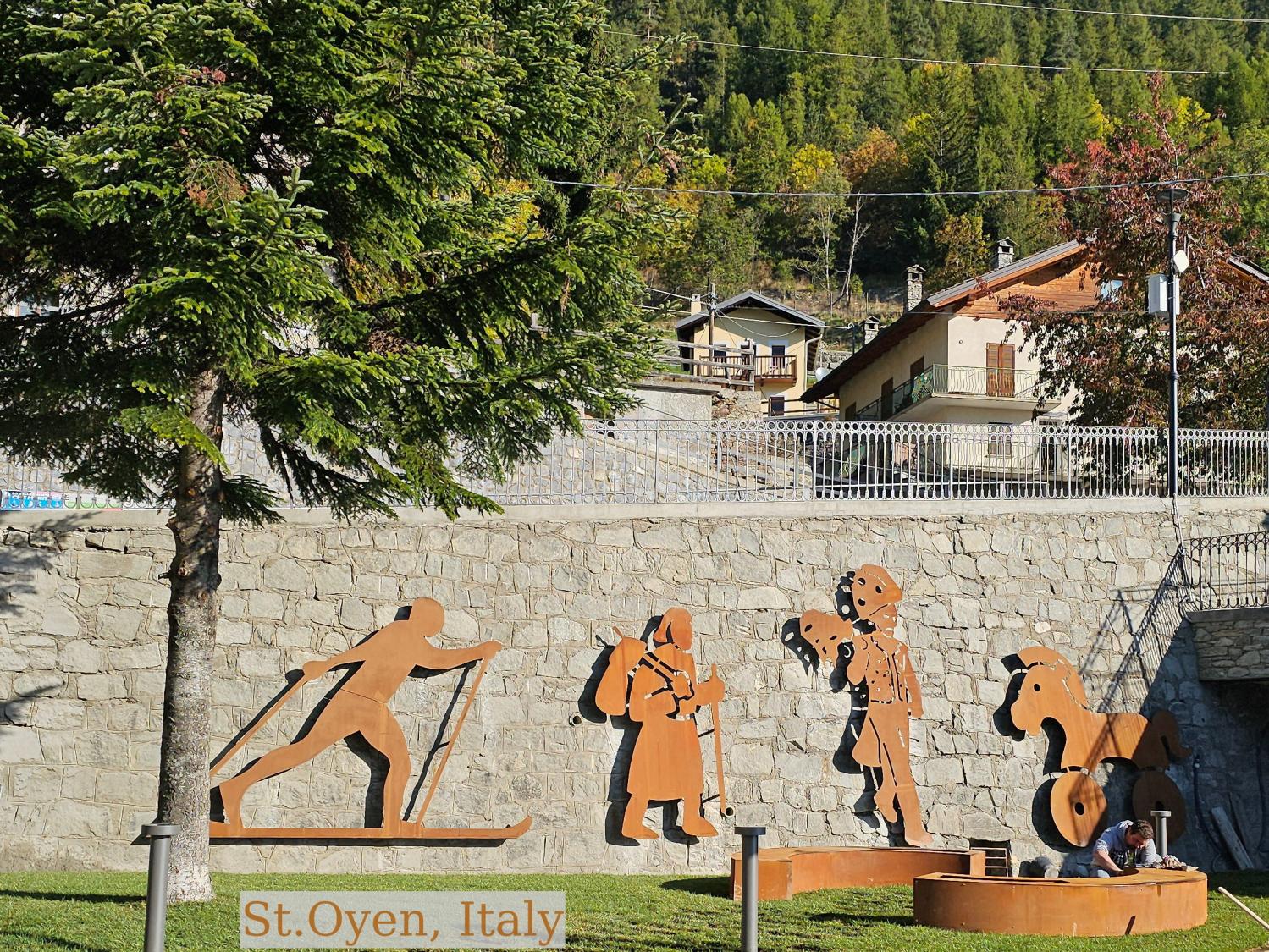
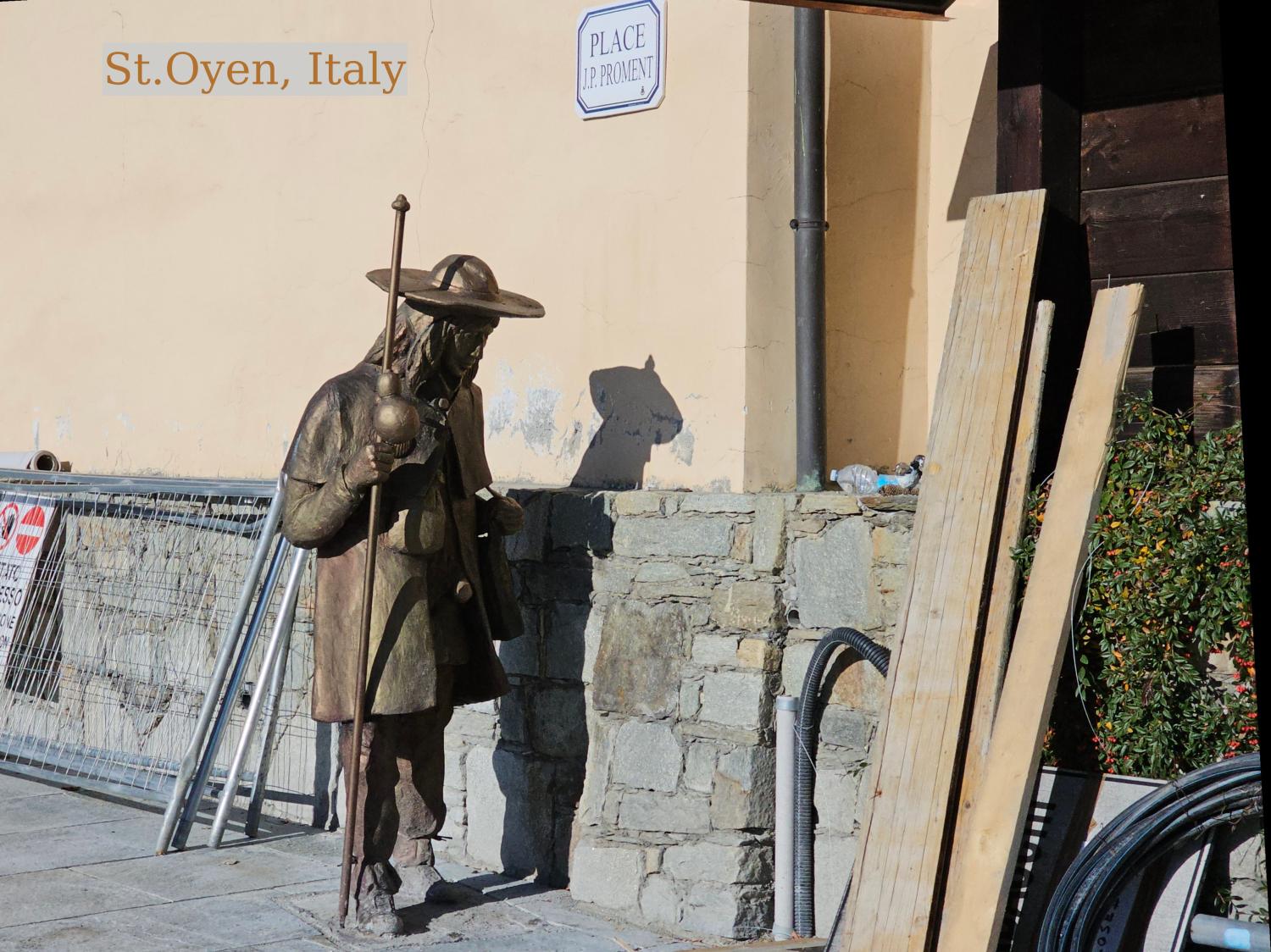
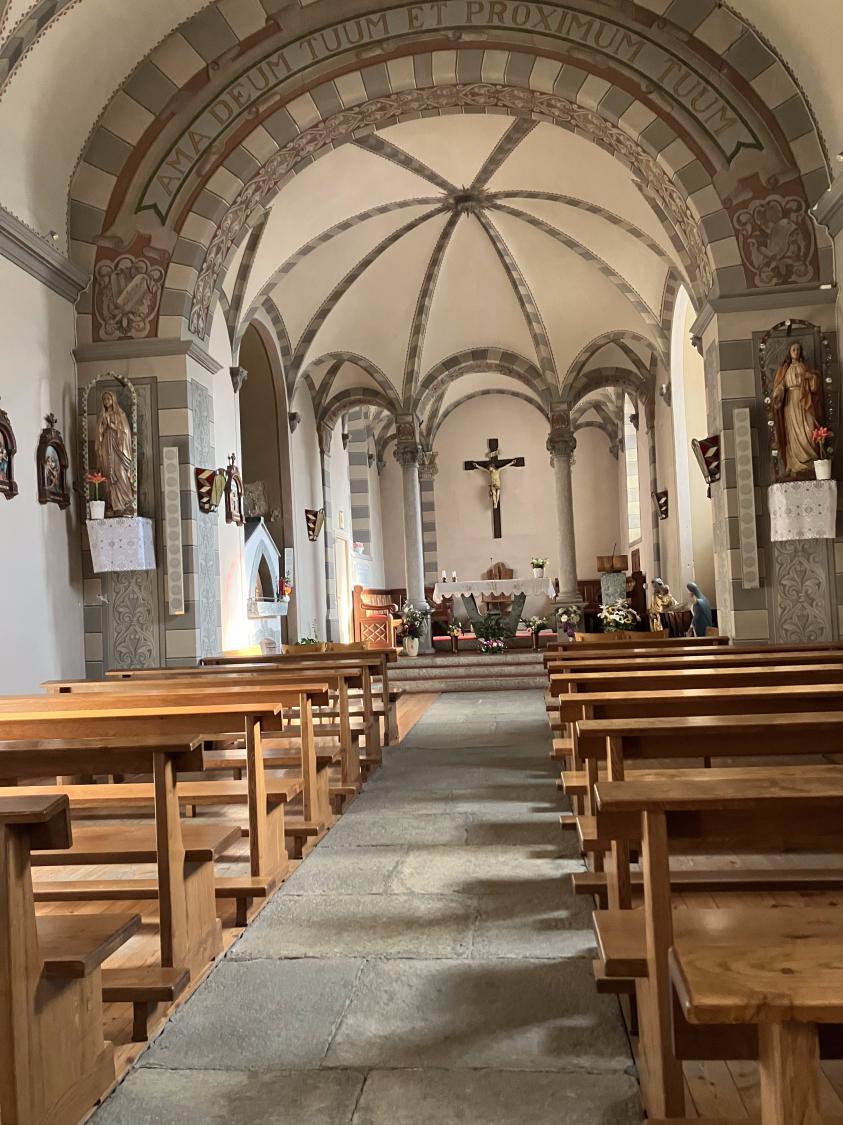
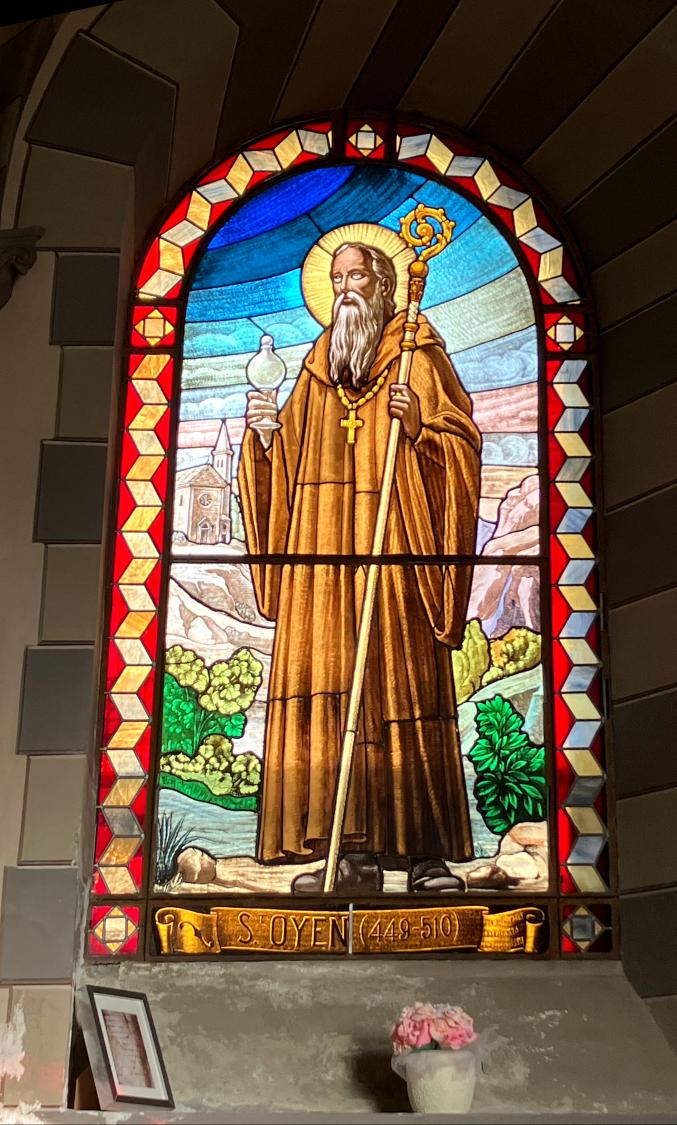
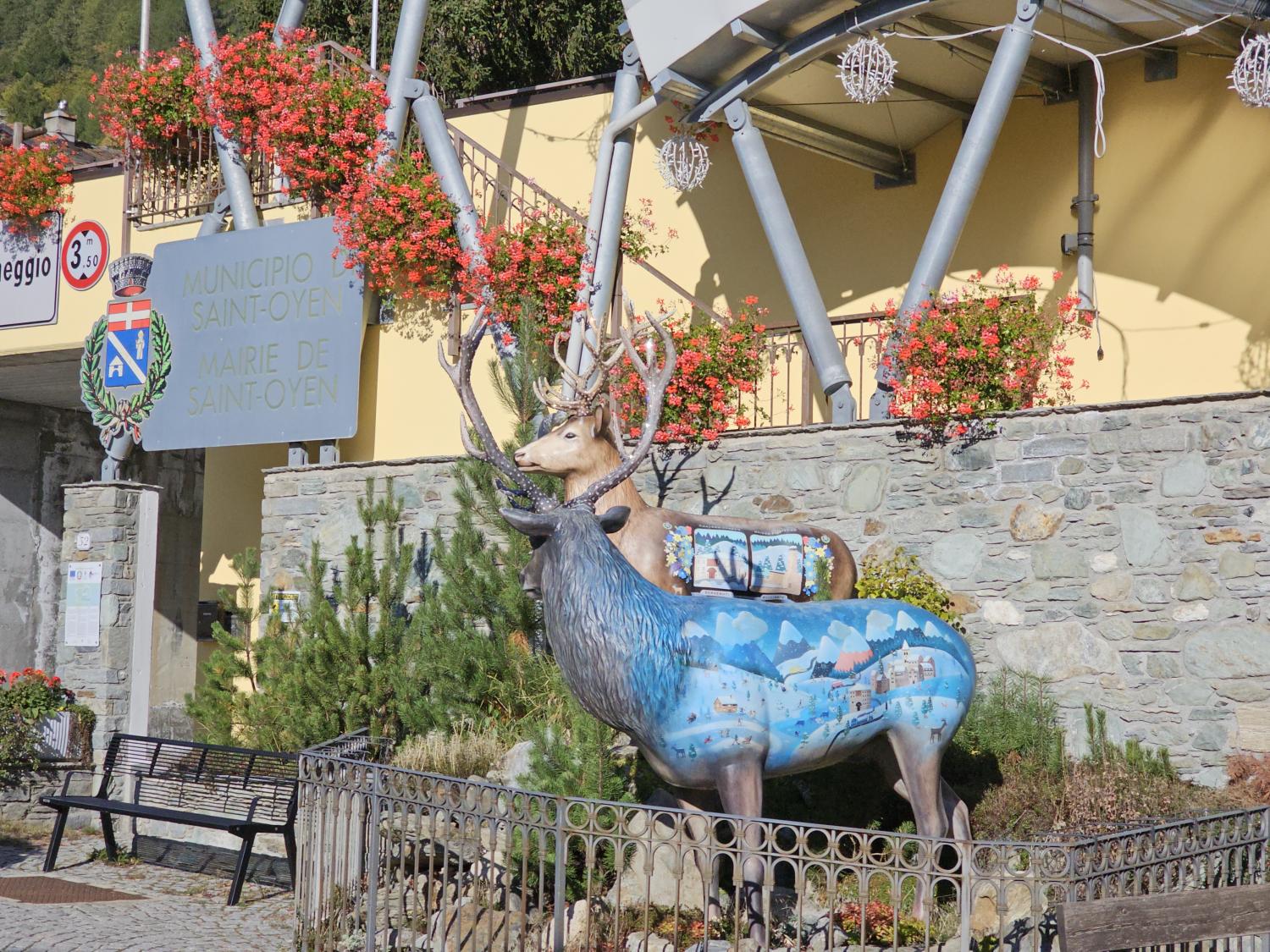
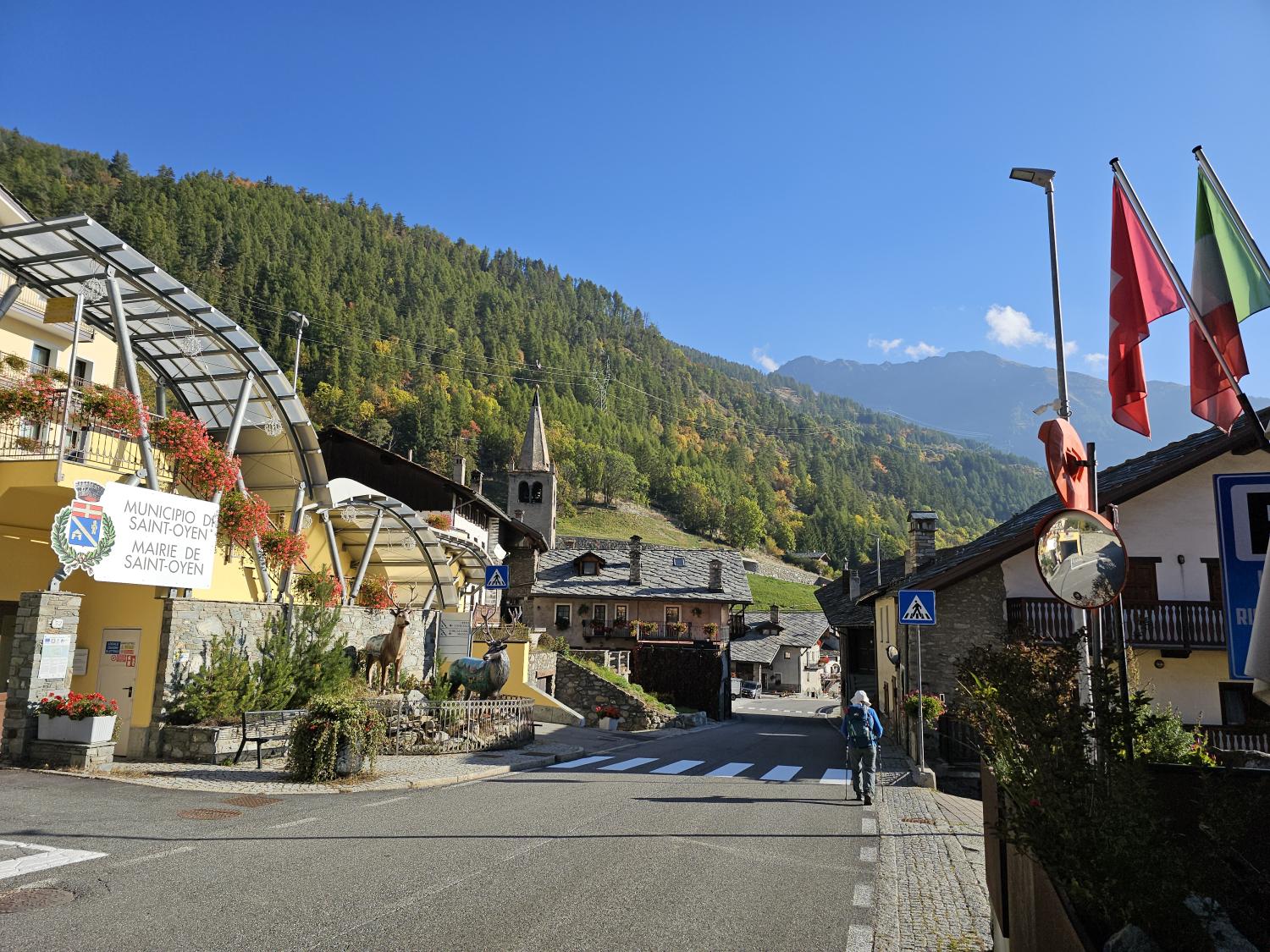
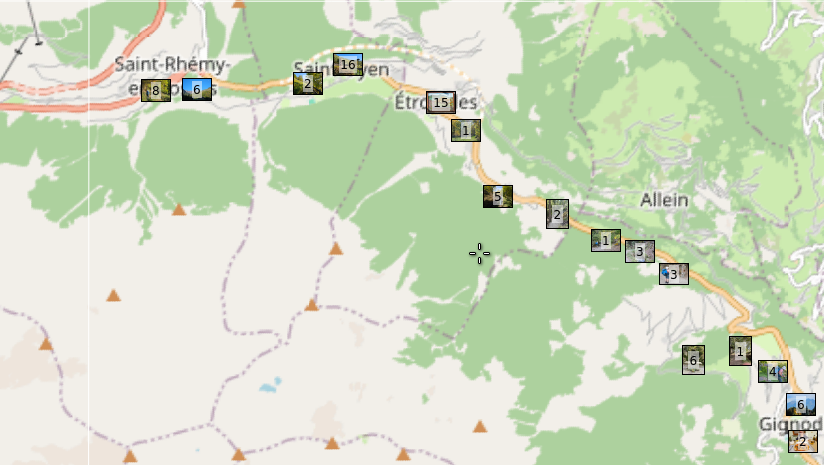
into the autumn mists. The land levelled out into a pleasant valley, and we continued to St.Oyen,
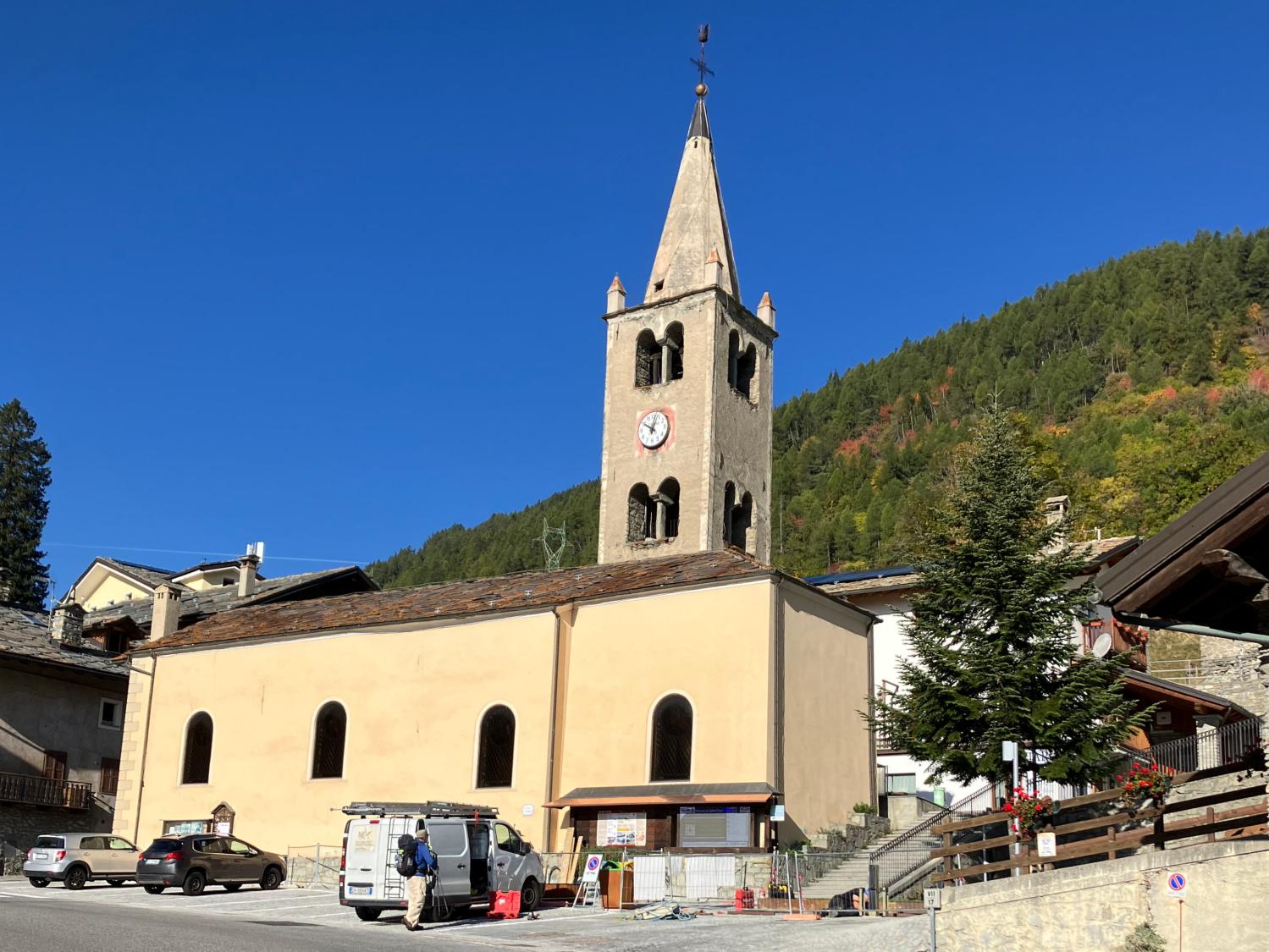
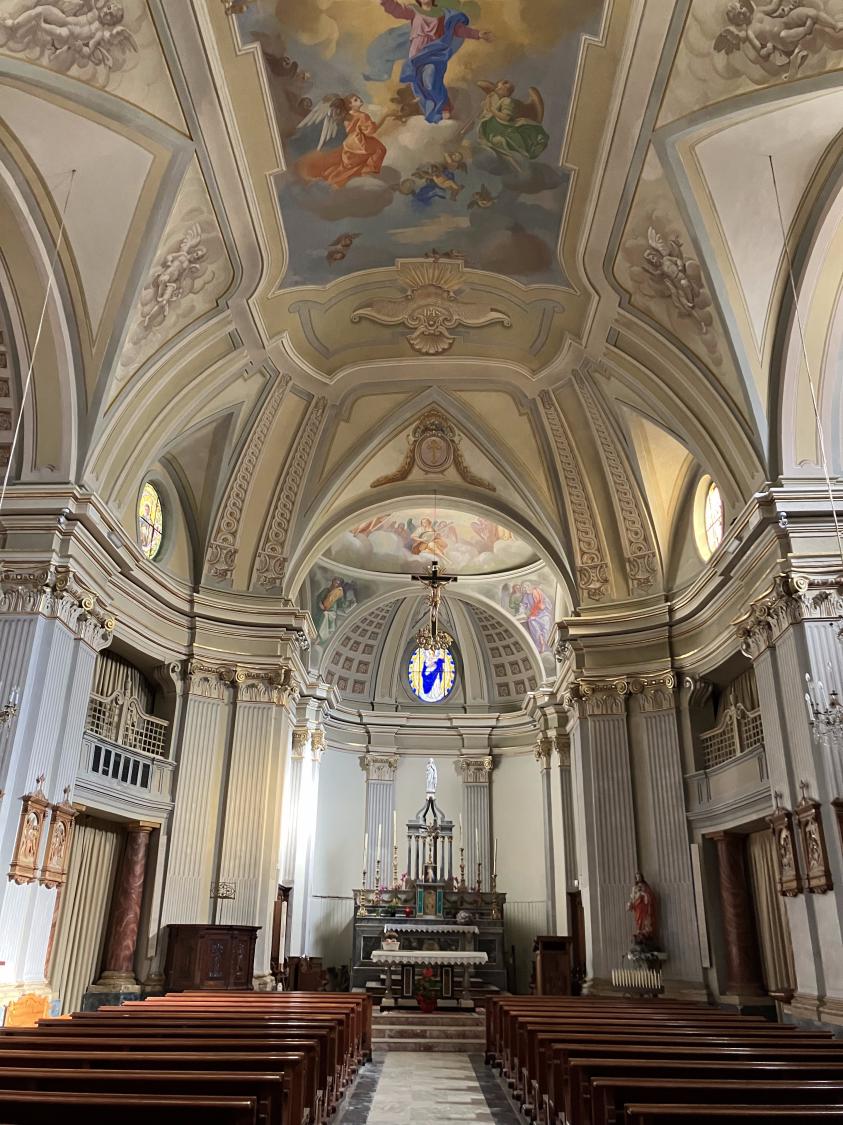
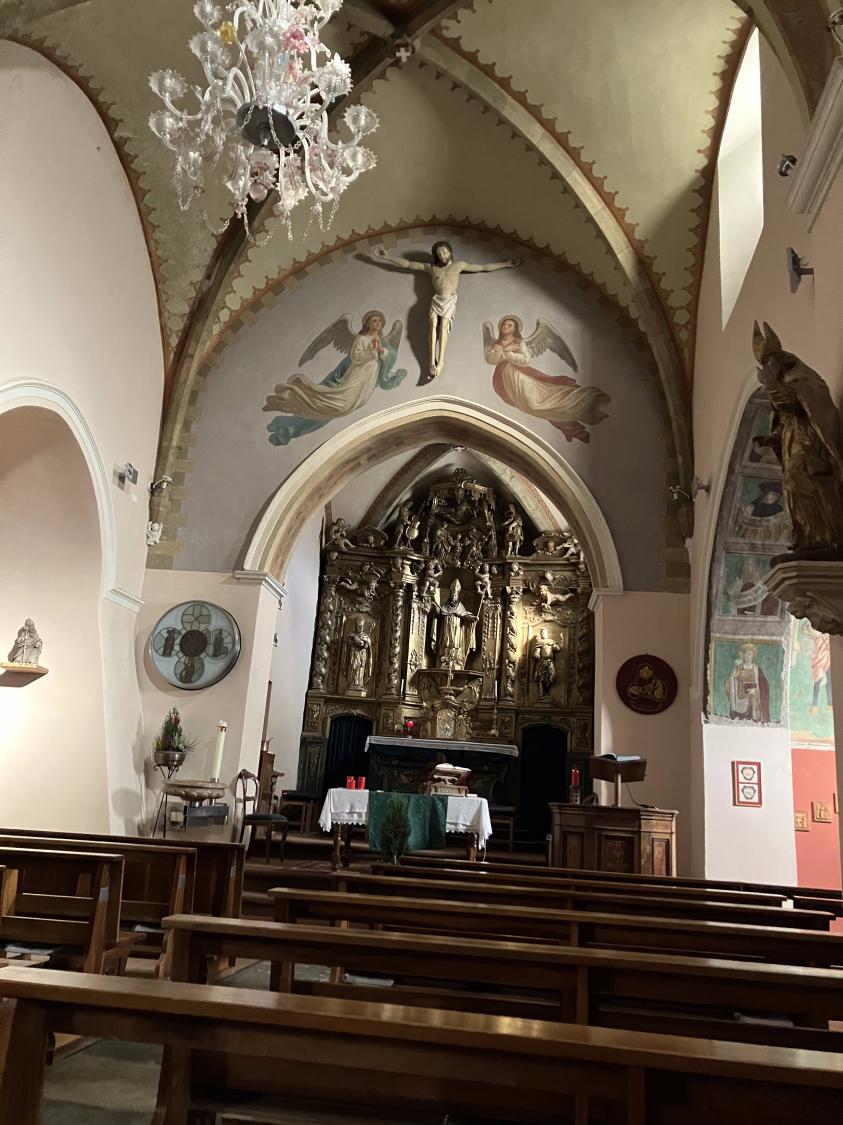
where we looked around the church, but failed to find an open coffee shop. On leaving
the village, we passed by a farm named Château Verdun, which during the Middle Ages,
supplied food to the hospice, and today offers pilgrim accommodation. From there, it was a
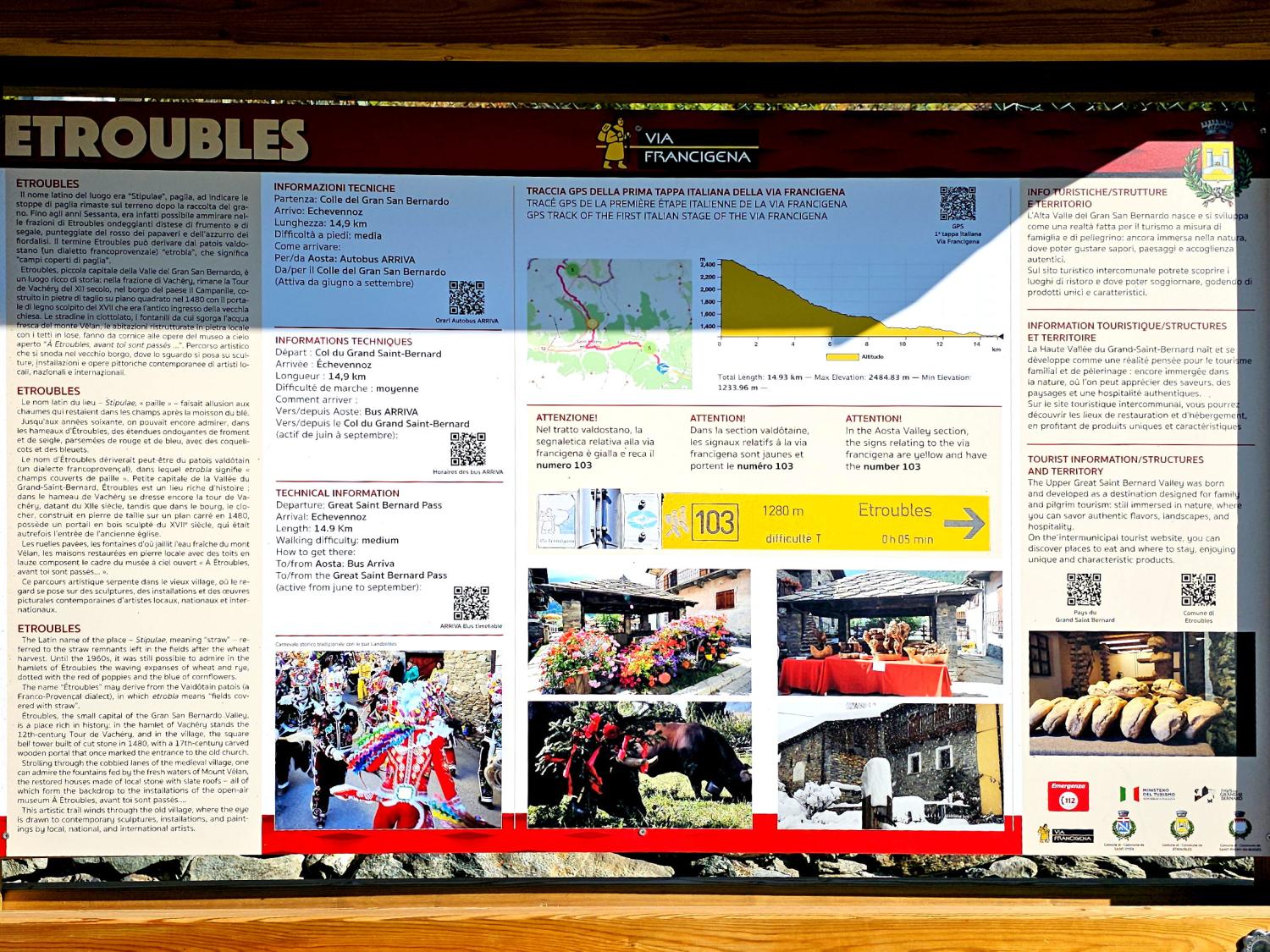
short walk to Etroubles, where we had been taken 10 minutes by car the previous evening to eat!
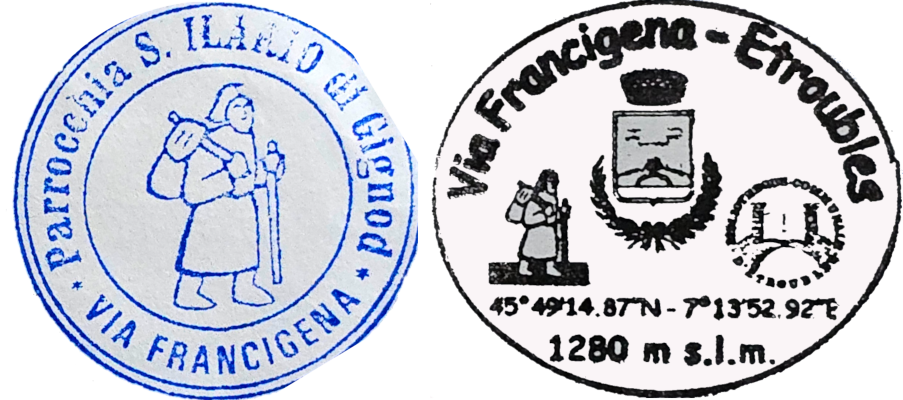
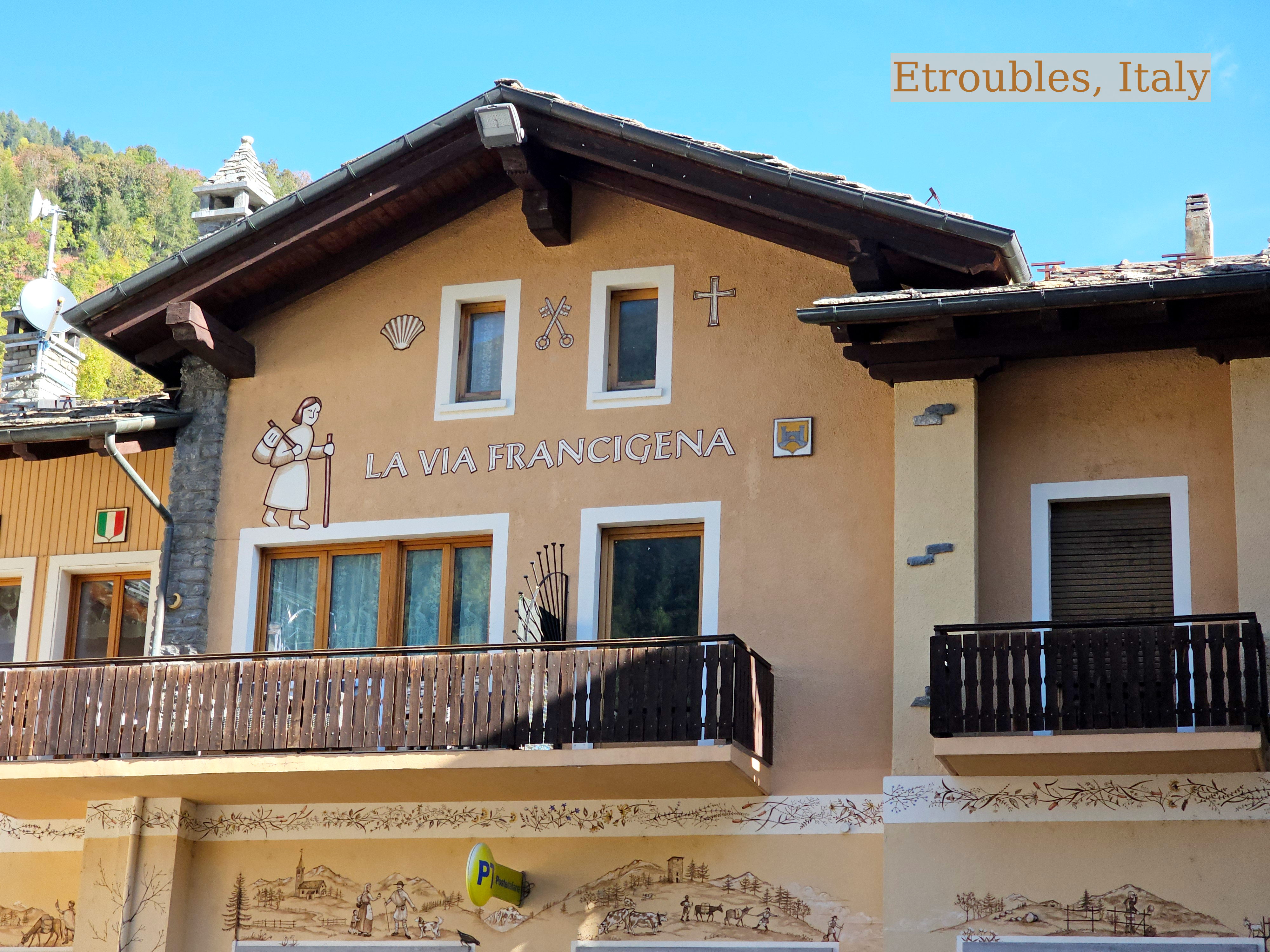
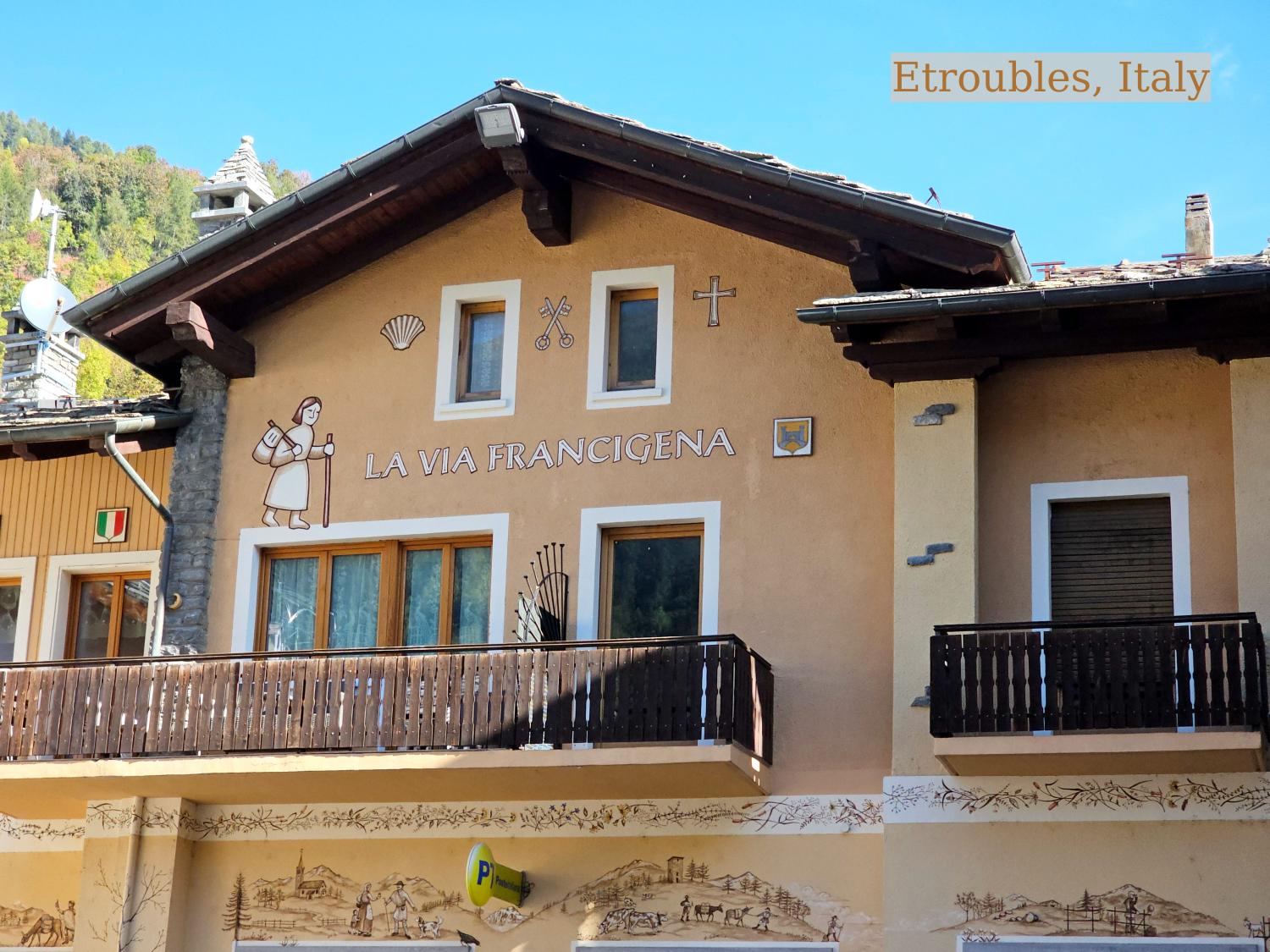
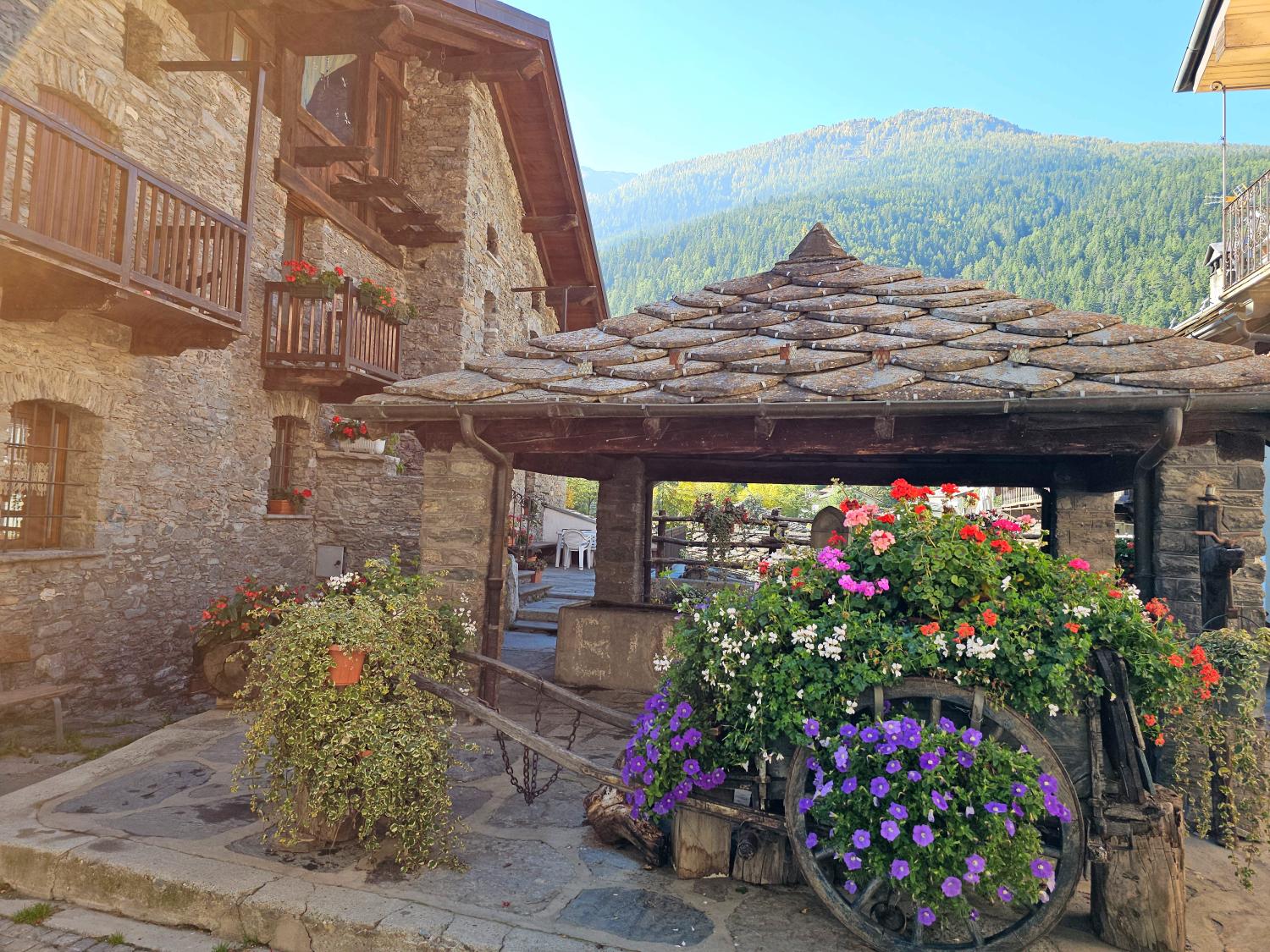
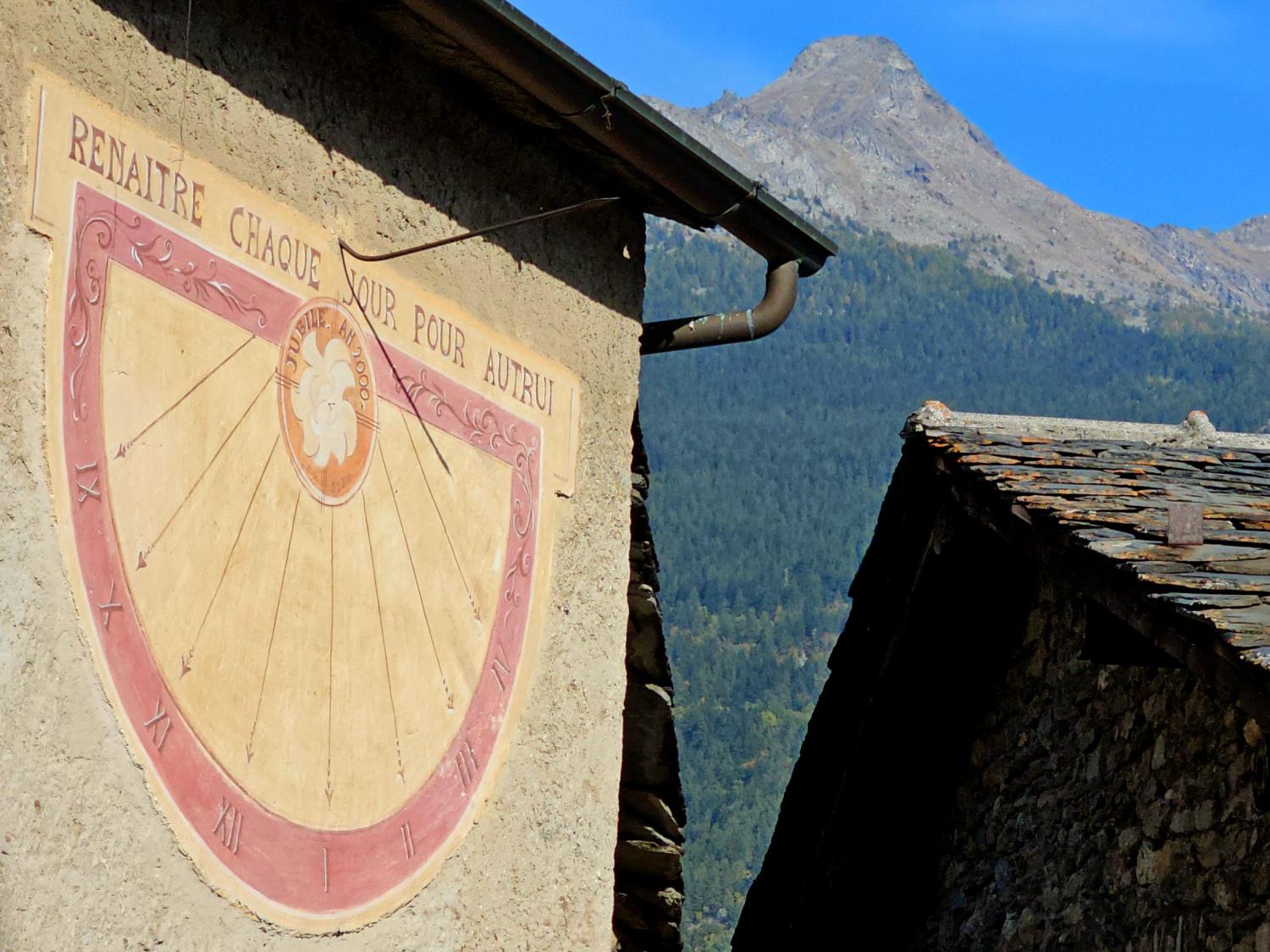
The old village of Etroubles was deserted, despite signs offering pilgrim stamps and sustenance,
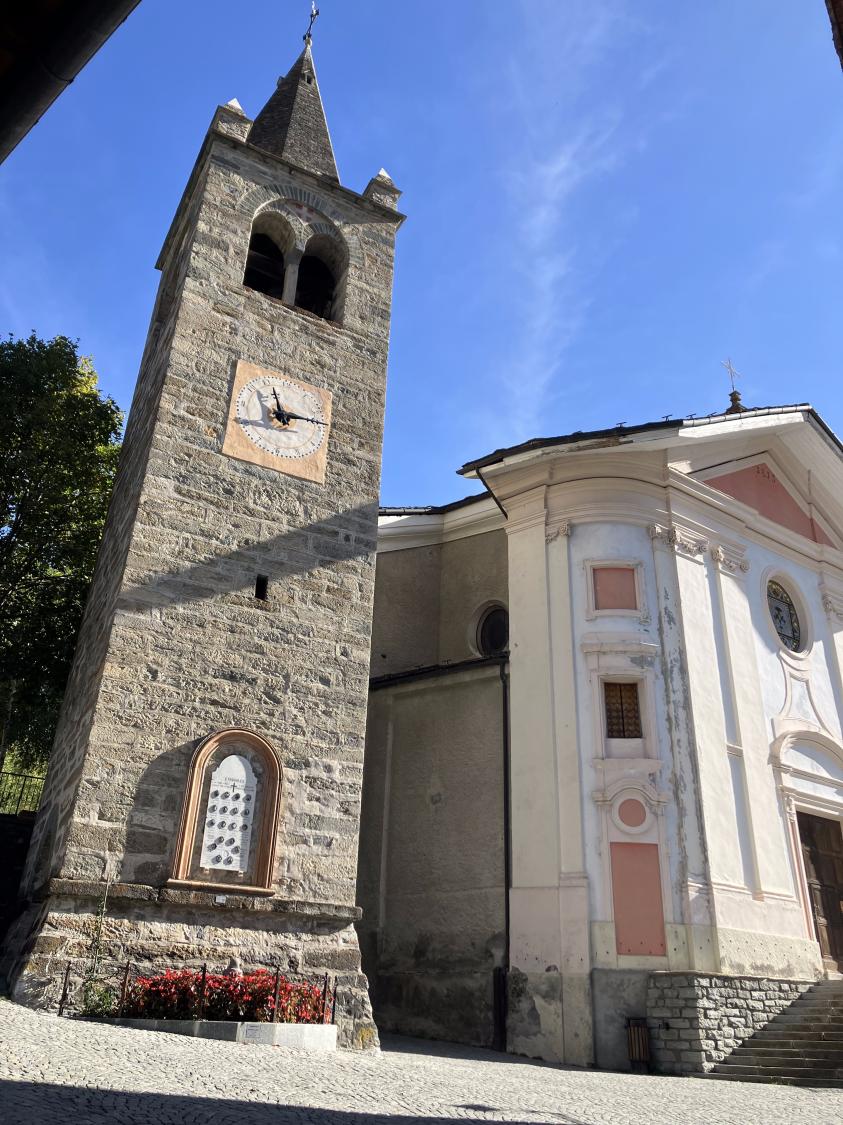
but we walked around the almost deserted village, visited the church, and then met a local
who pointed us to a niche in the town square with a pilgrims' welcome table and stamp.
(Sue also helped the only other vistor's by taking their picture for them.)
On the way out, we came across an open grocery store on the edge of a campsite
and managed to purchase some necessities.
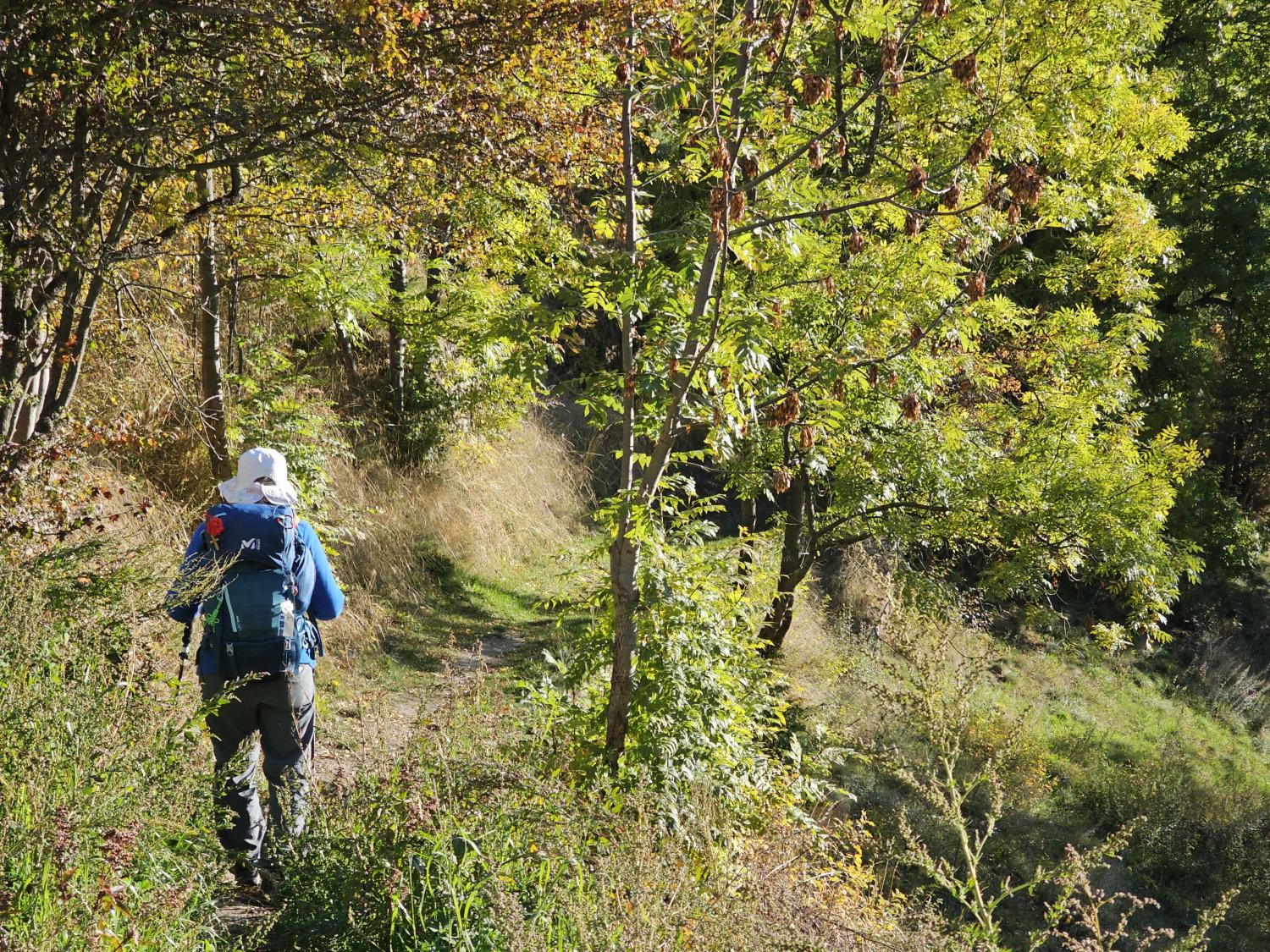
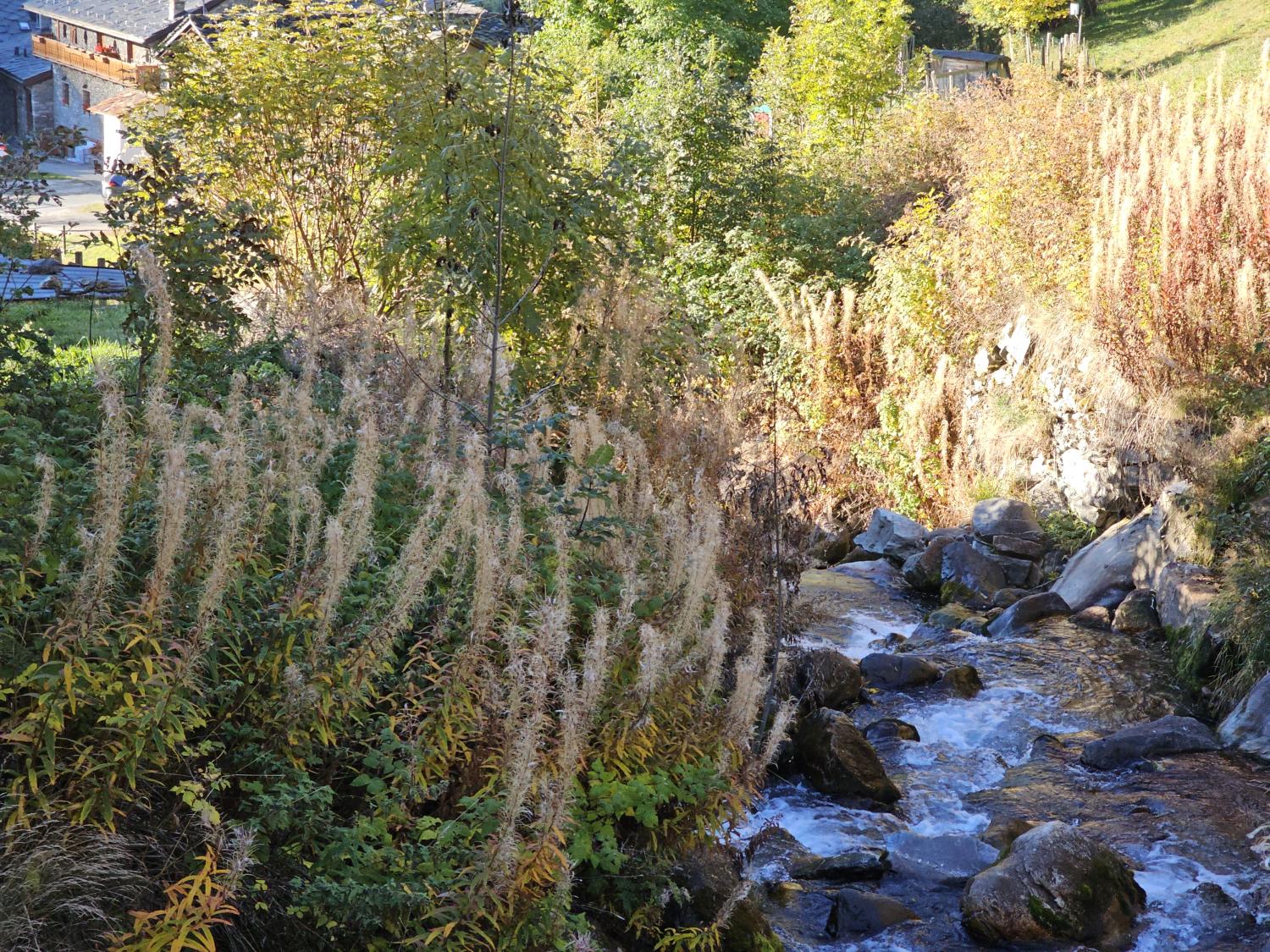
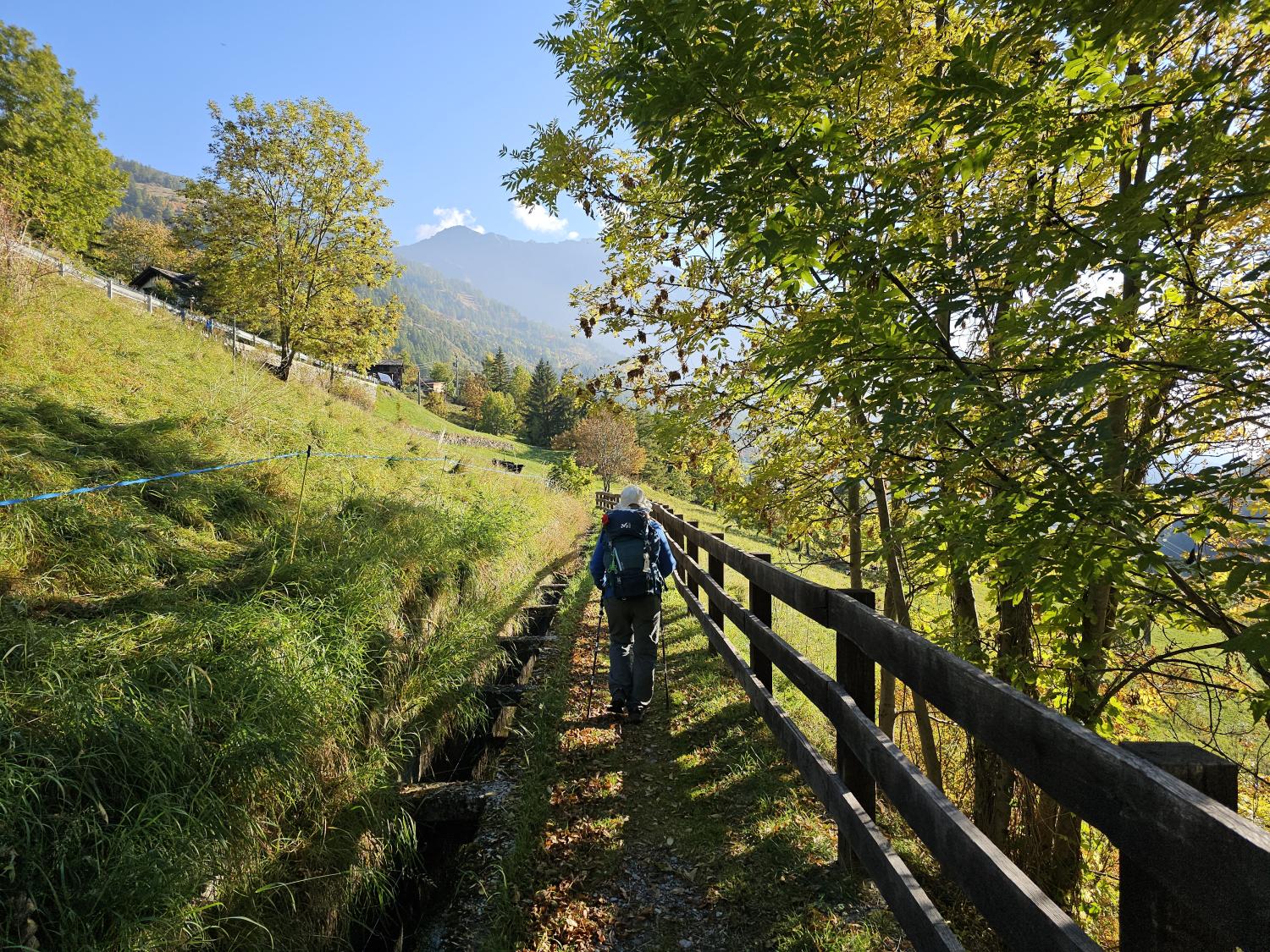
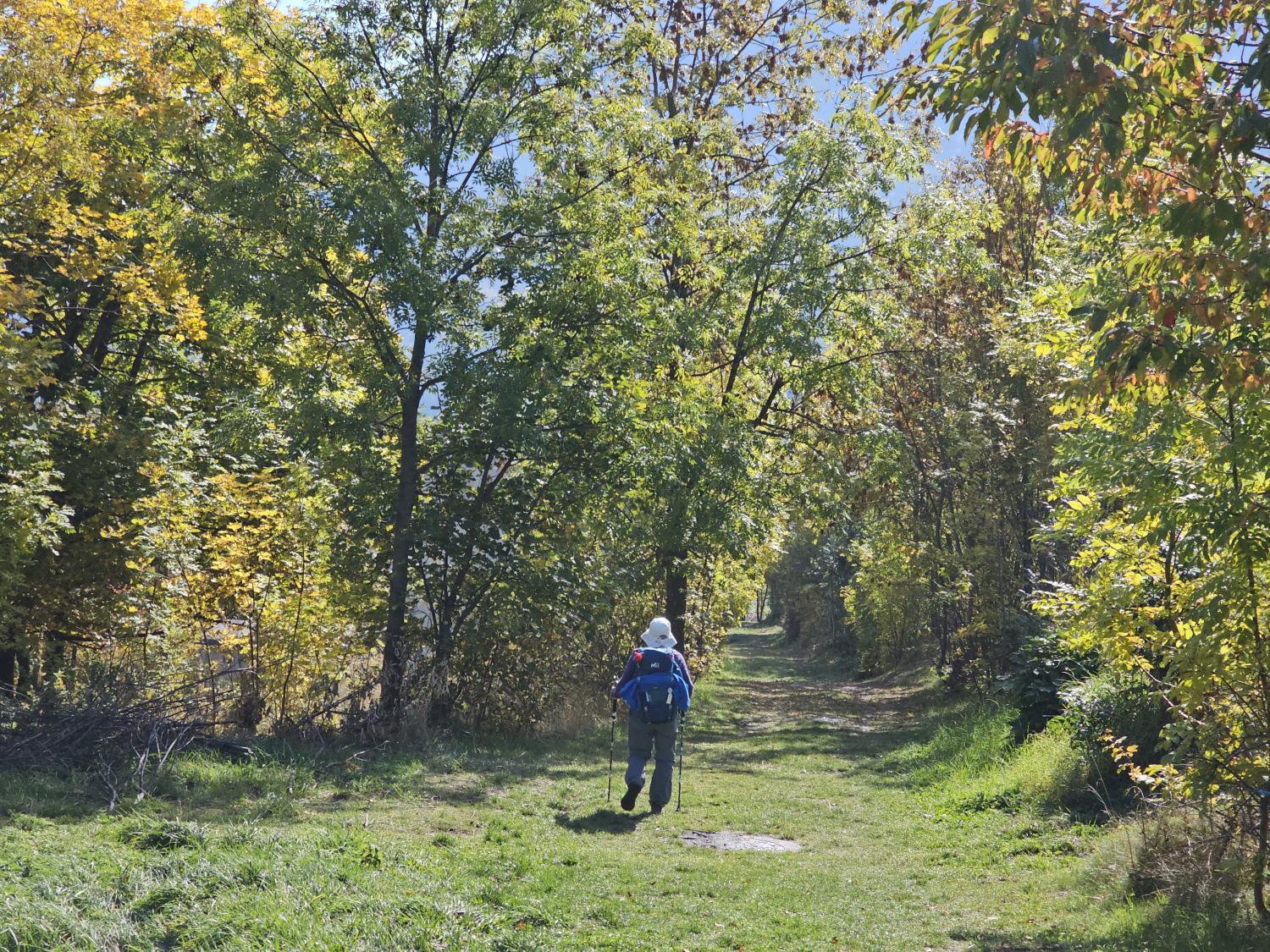
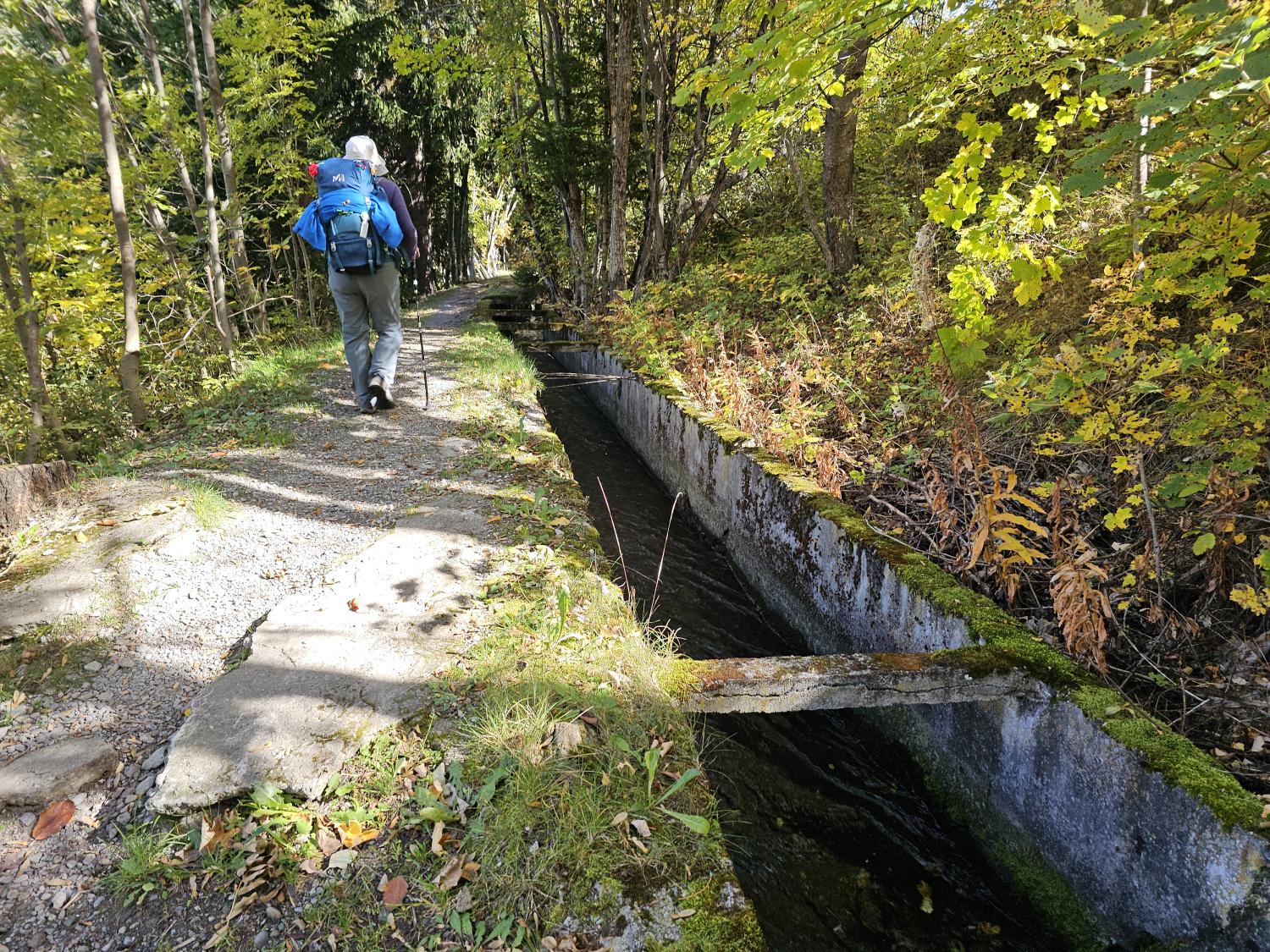
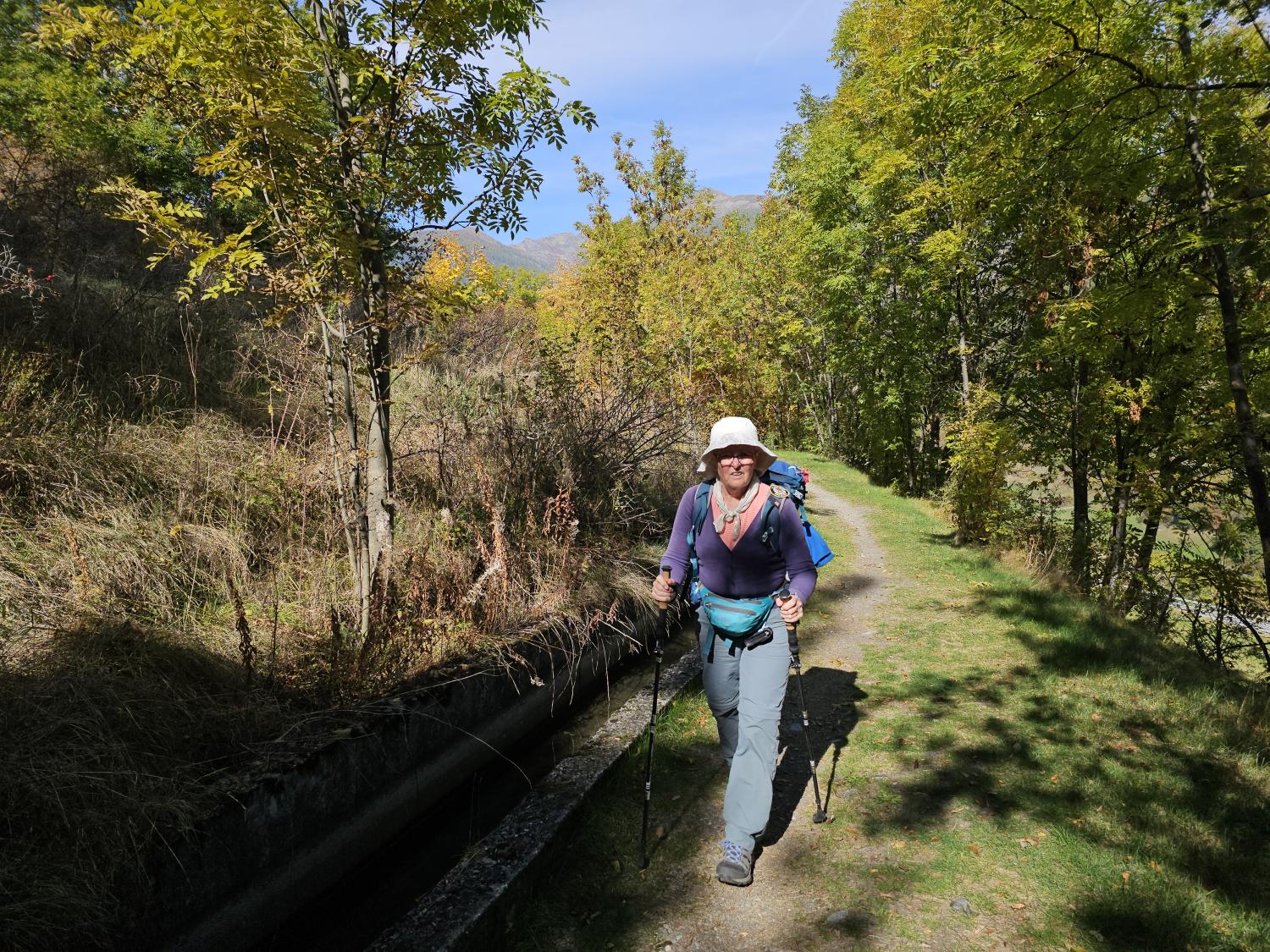
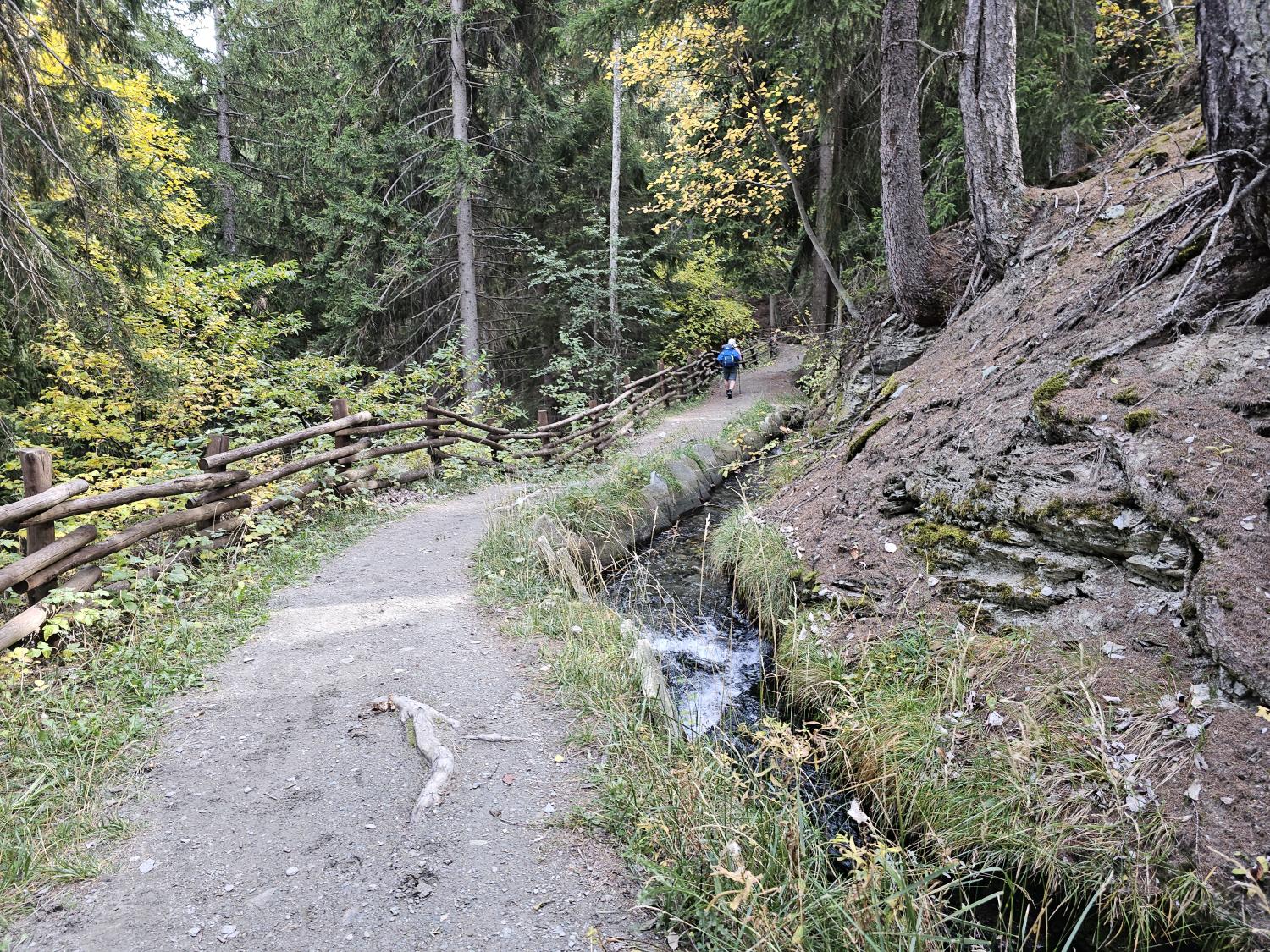
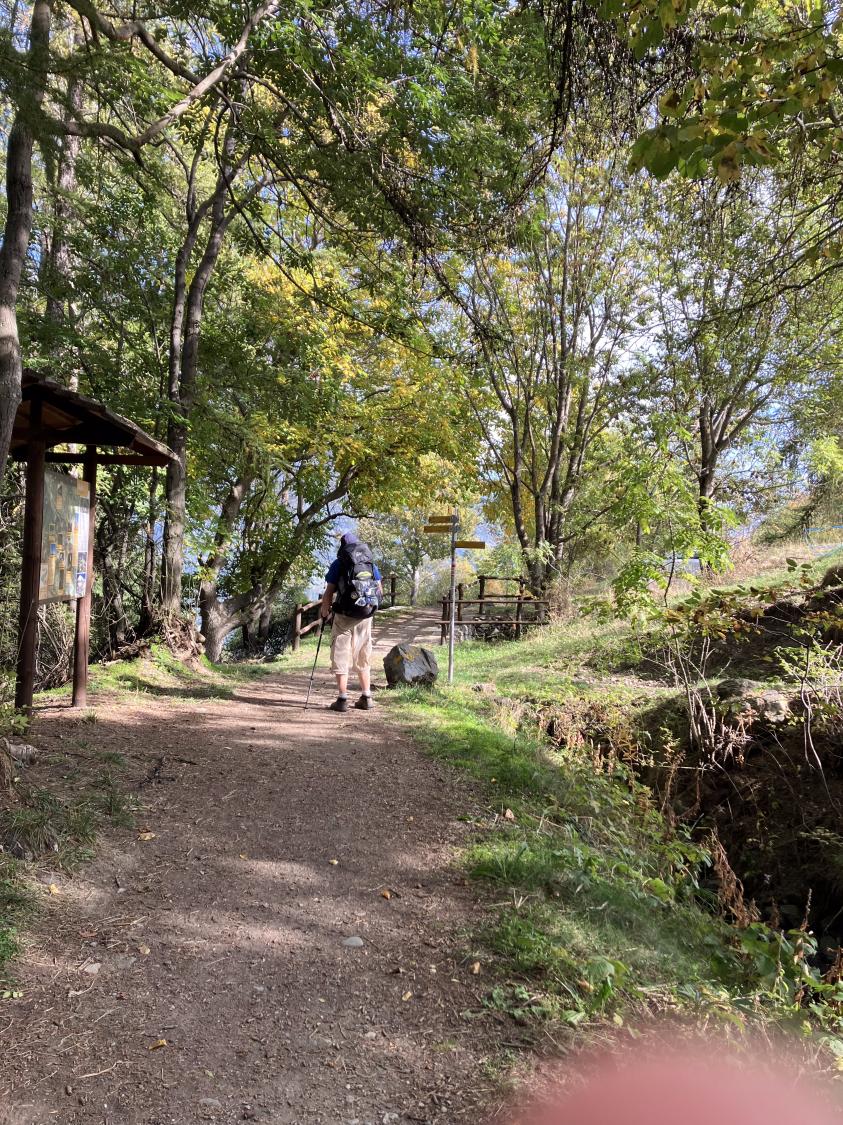
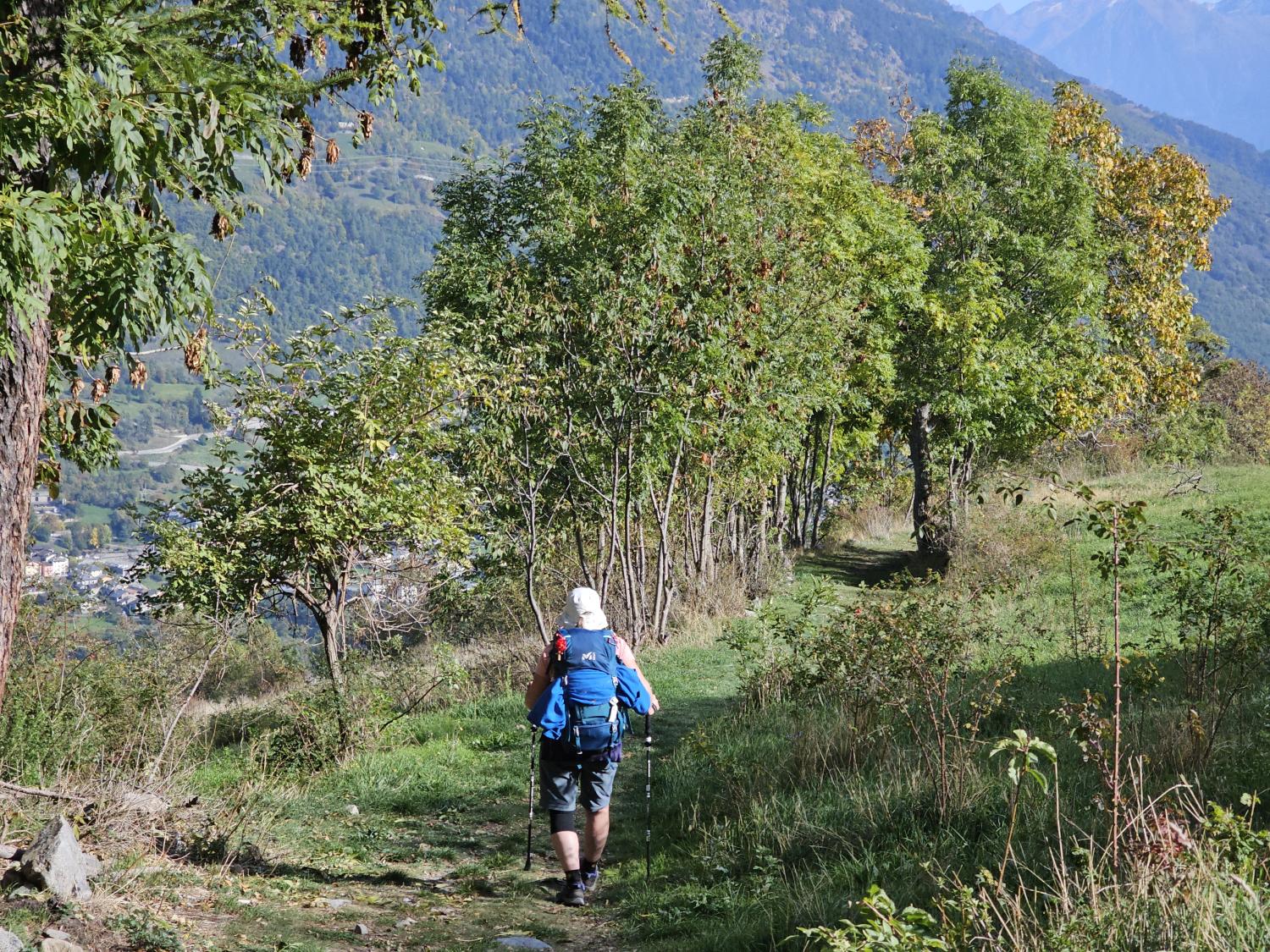
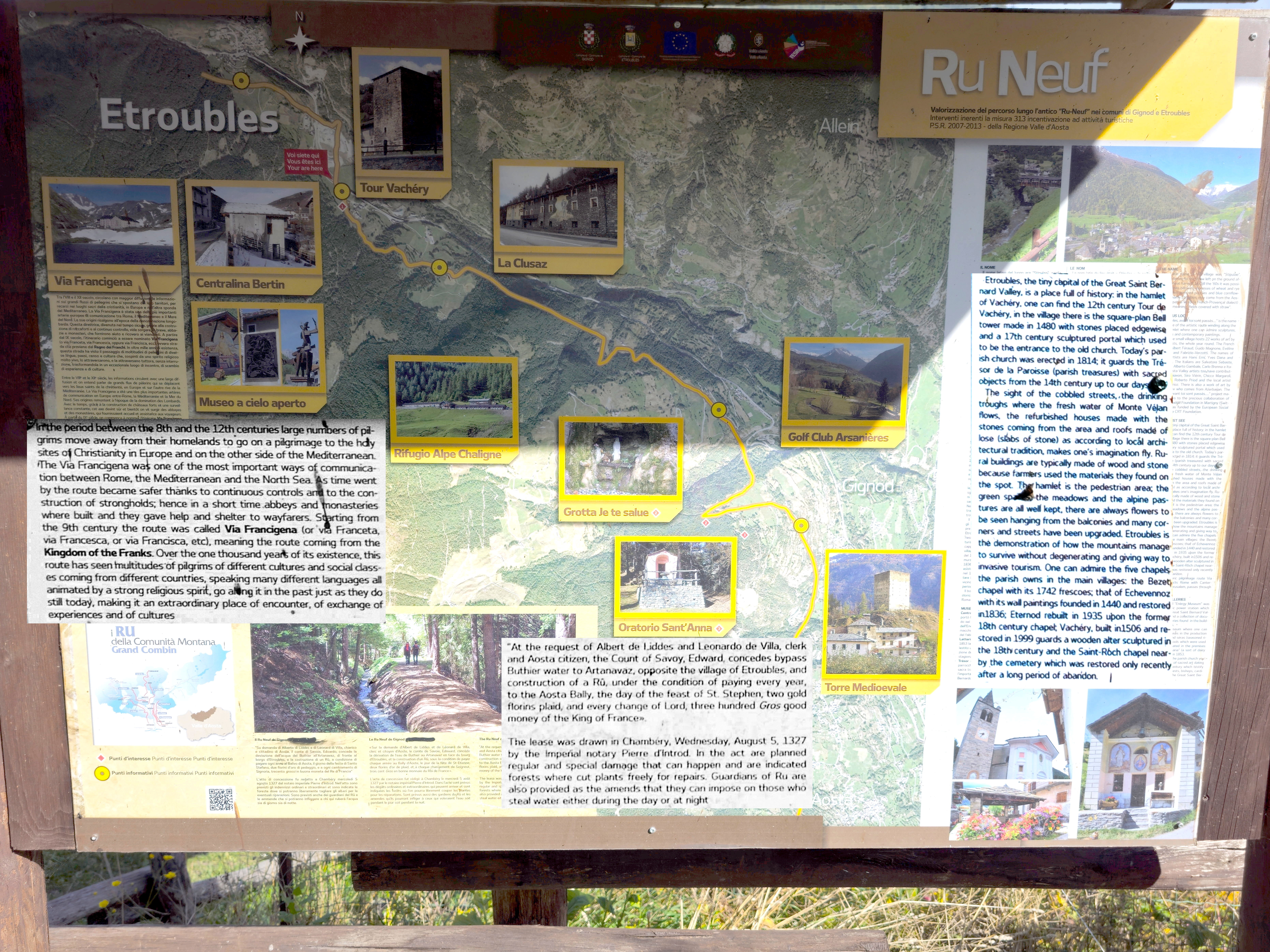
As we continued downhill, we started to follow the traditional, open irrigation channel,
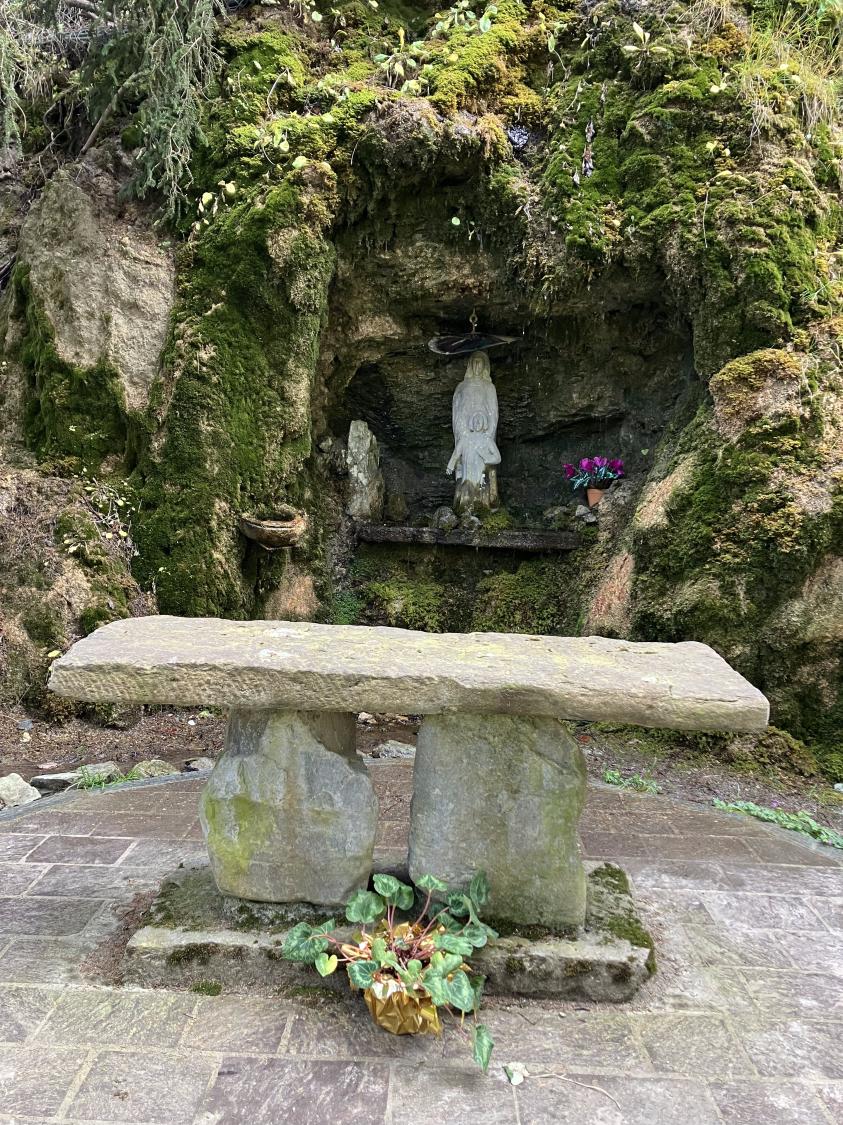
called Ru Neuf, which we followed for most of the afternoon, pausing at a convenient bench for
something to eat. Following the water course in its gentle downhill flow,
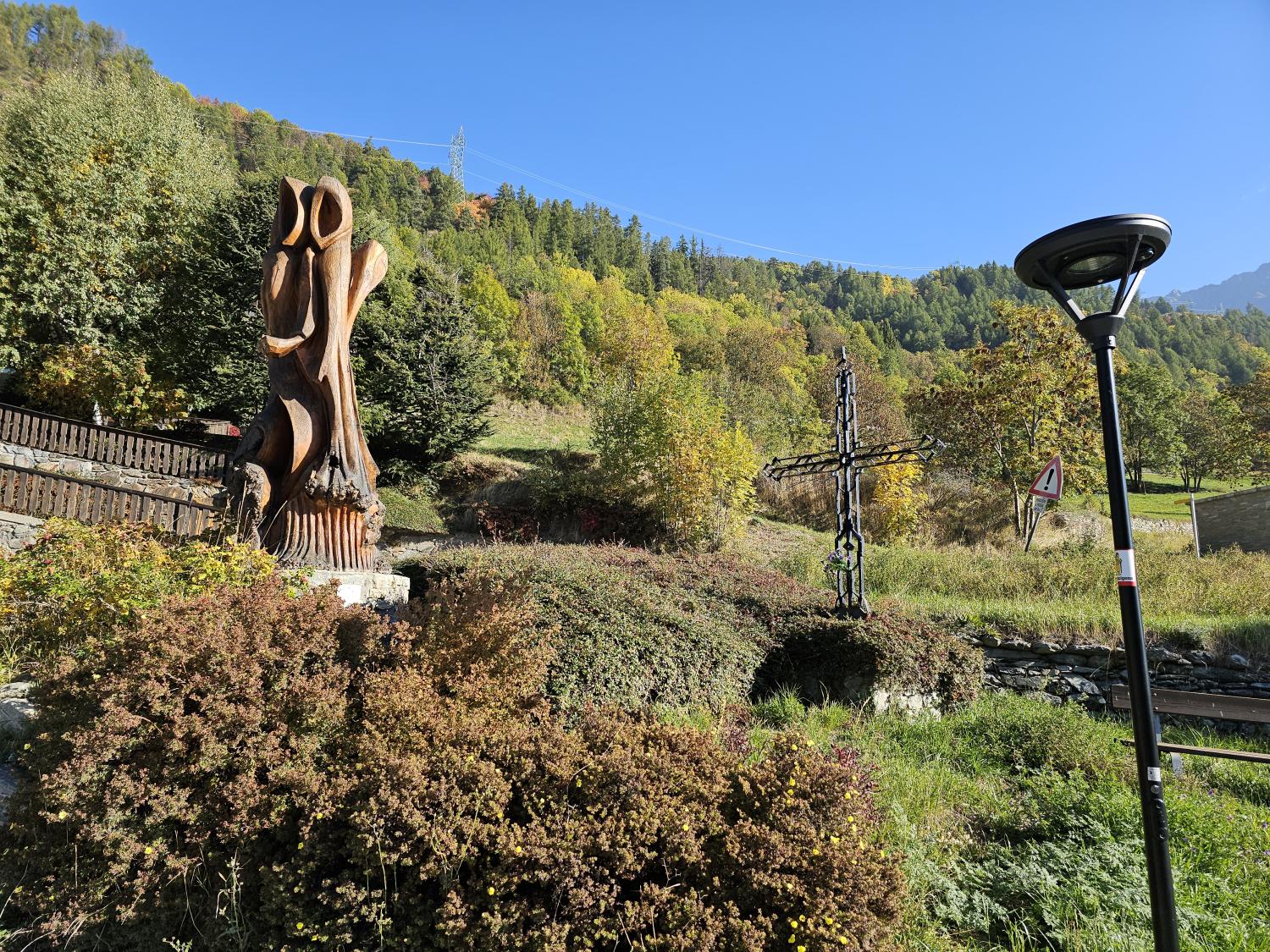
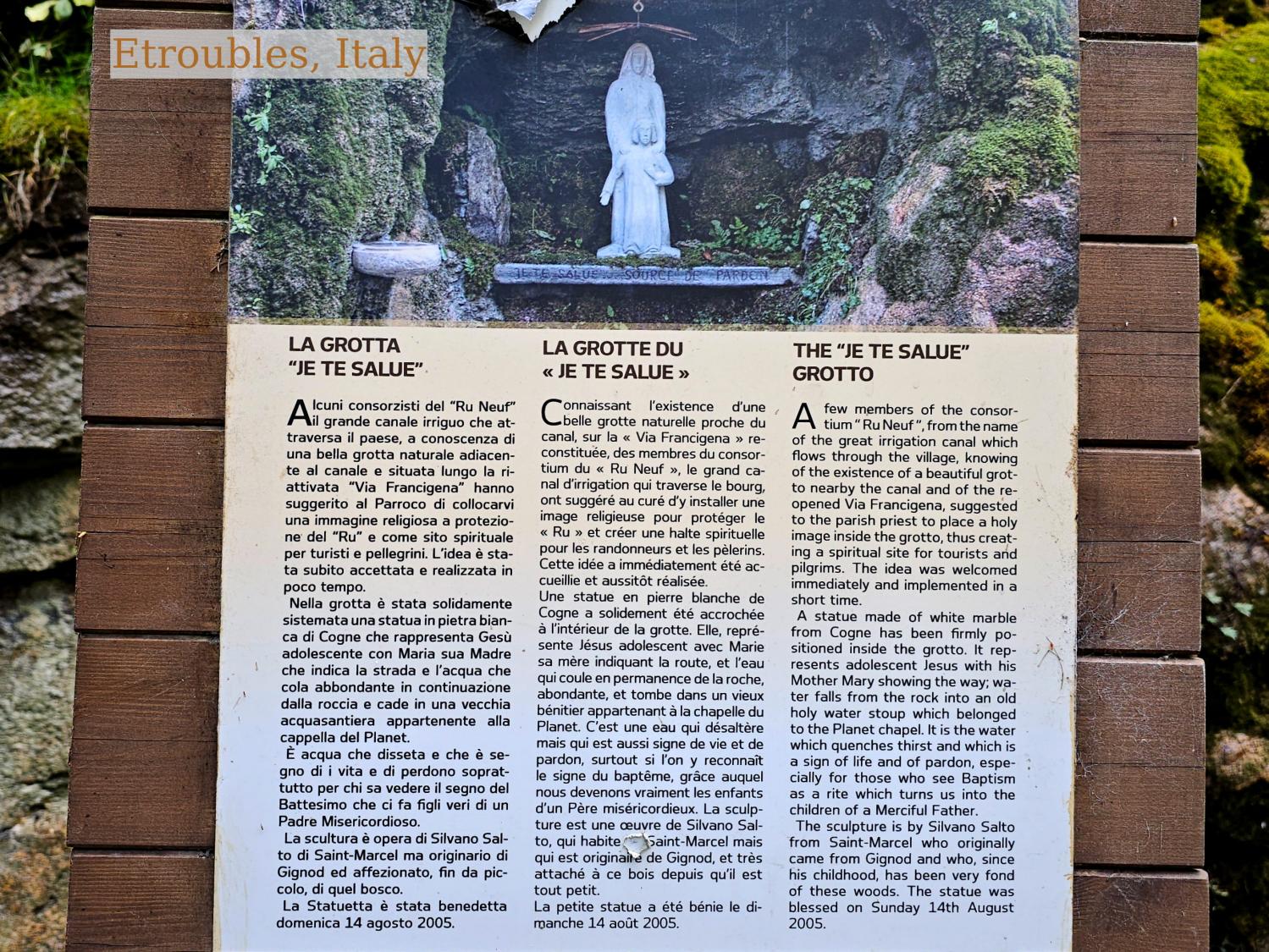
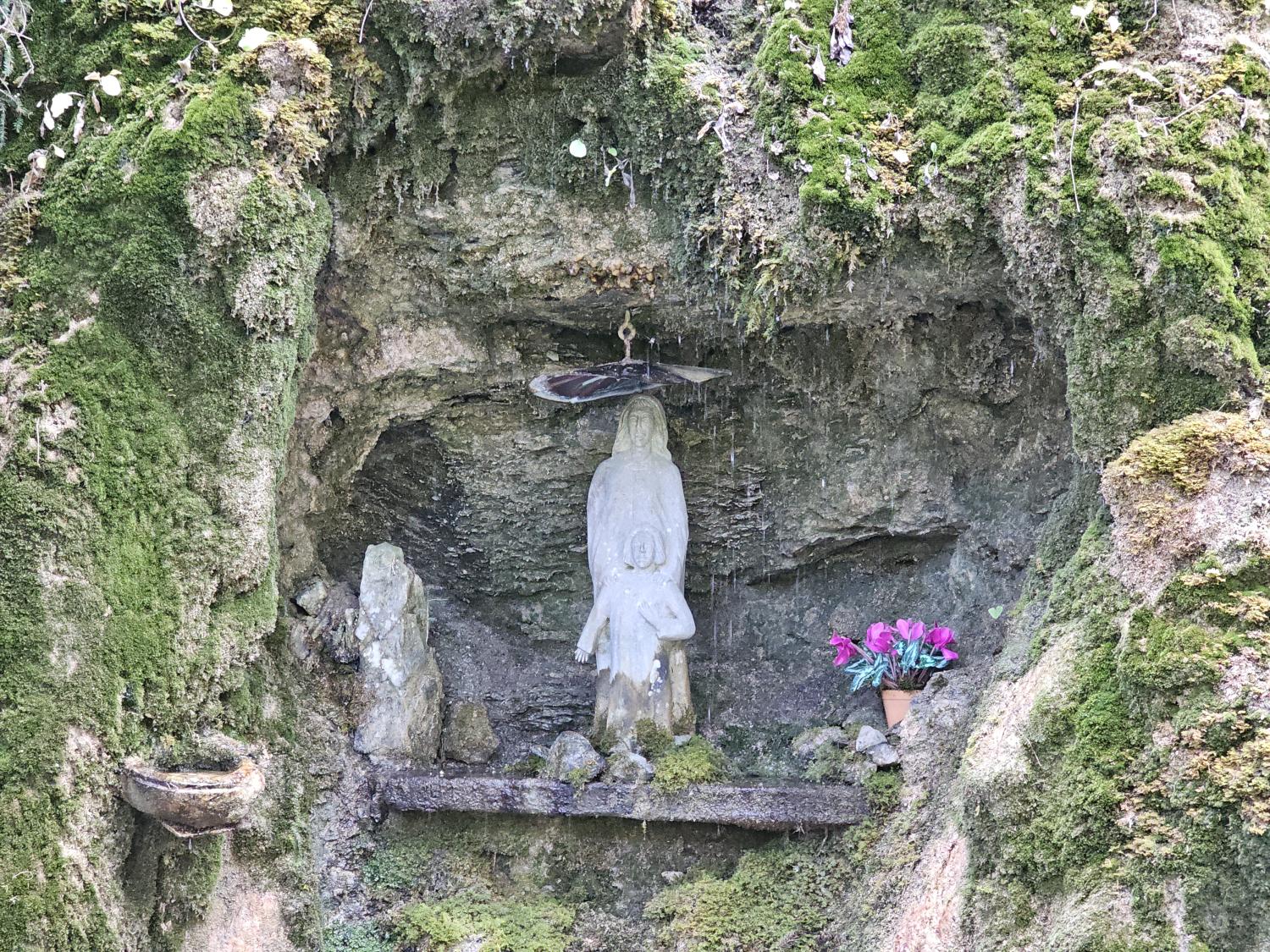
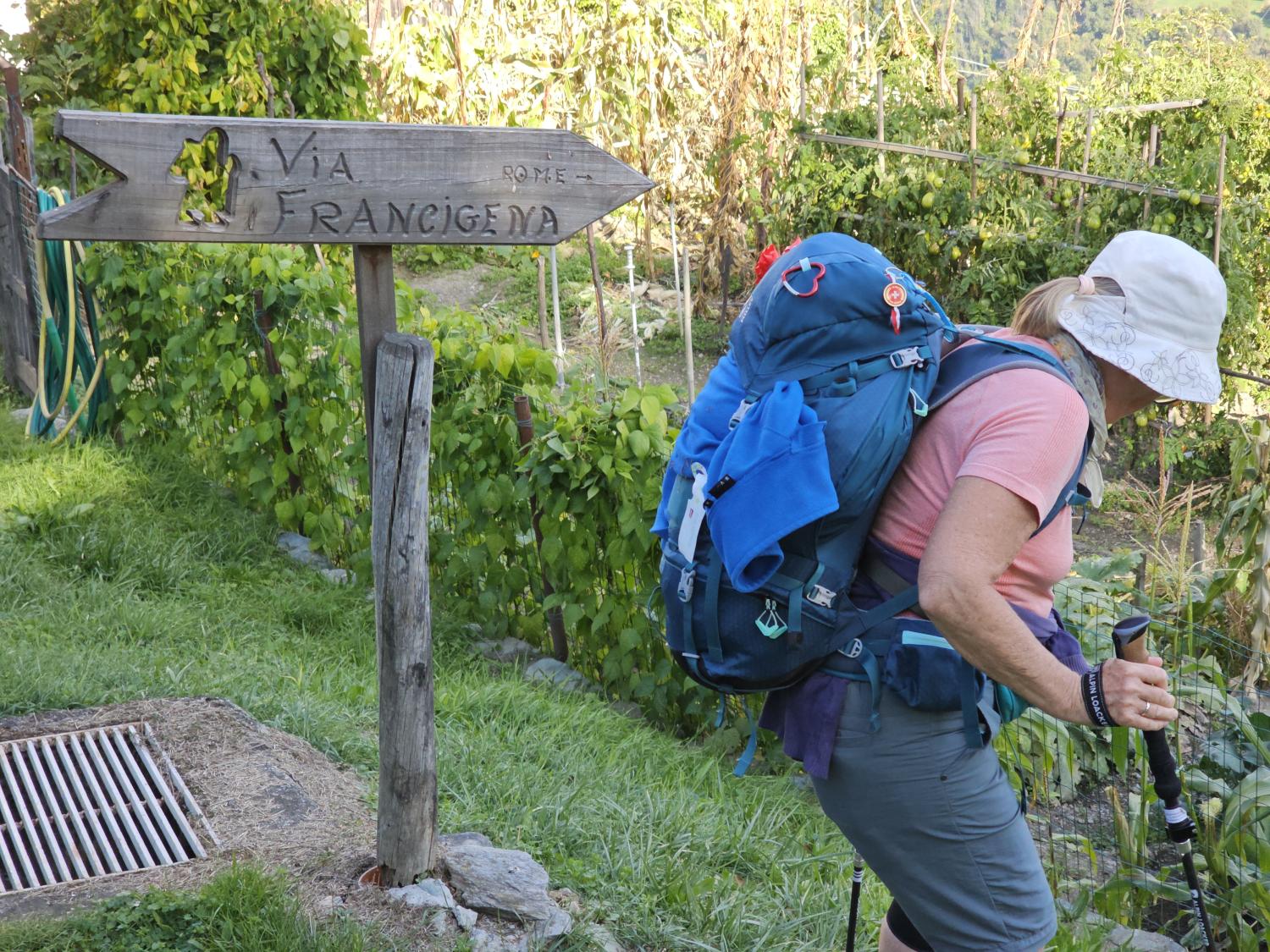
we came to a grotto in the bend of a valley, the "Je te salue" grotto, with a white marble statue of Mary,
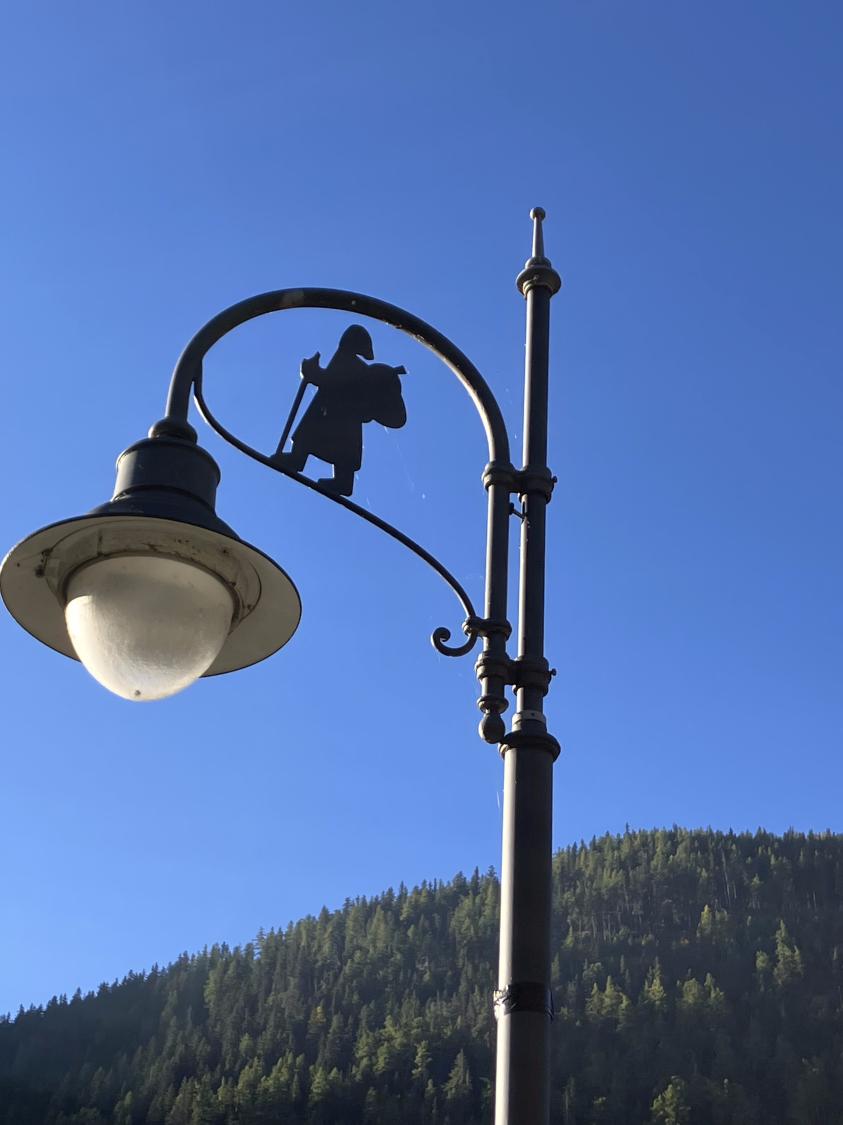
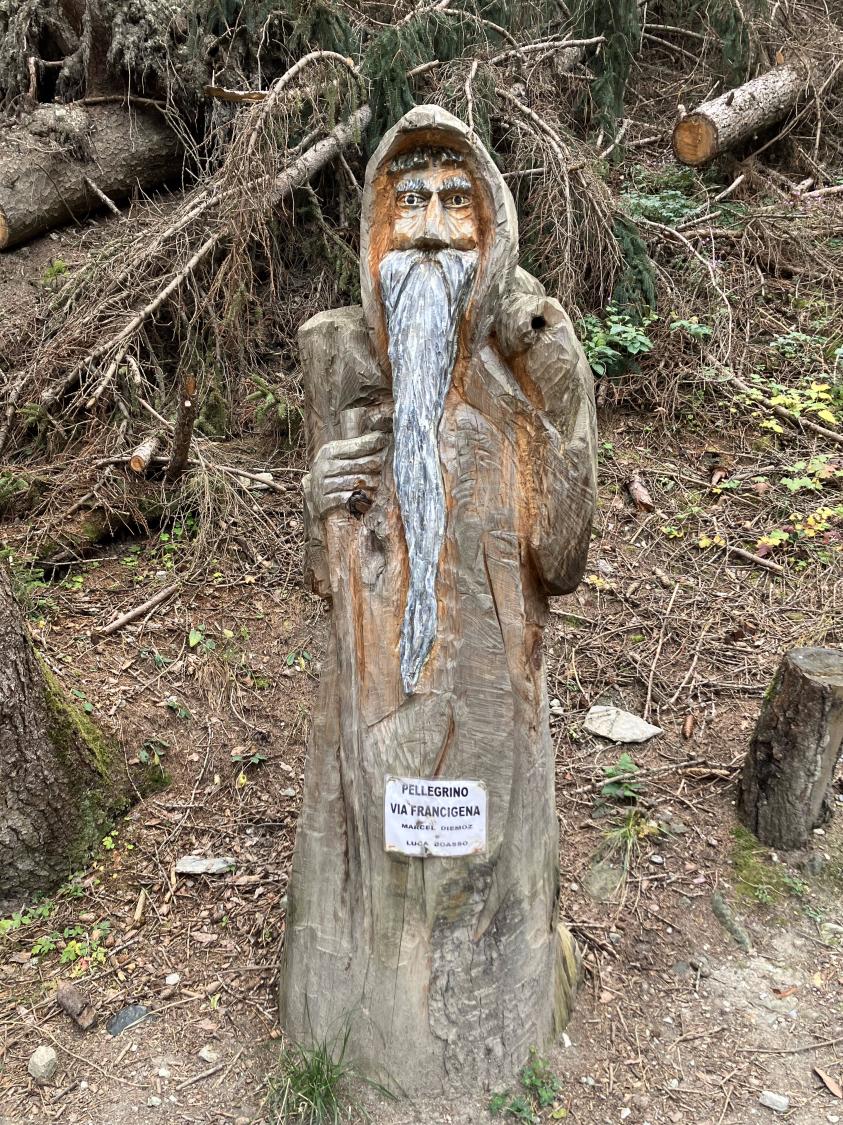
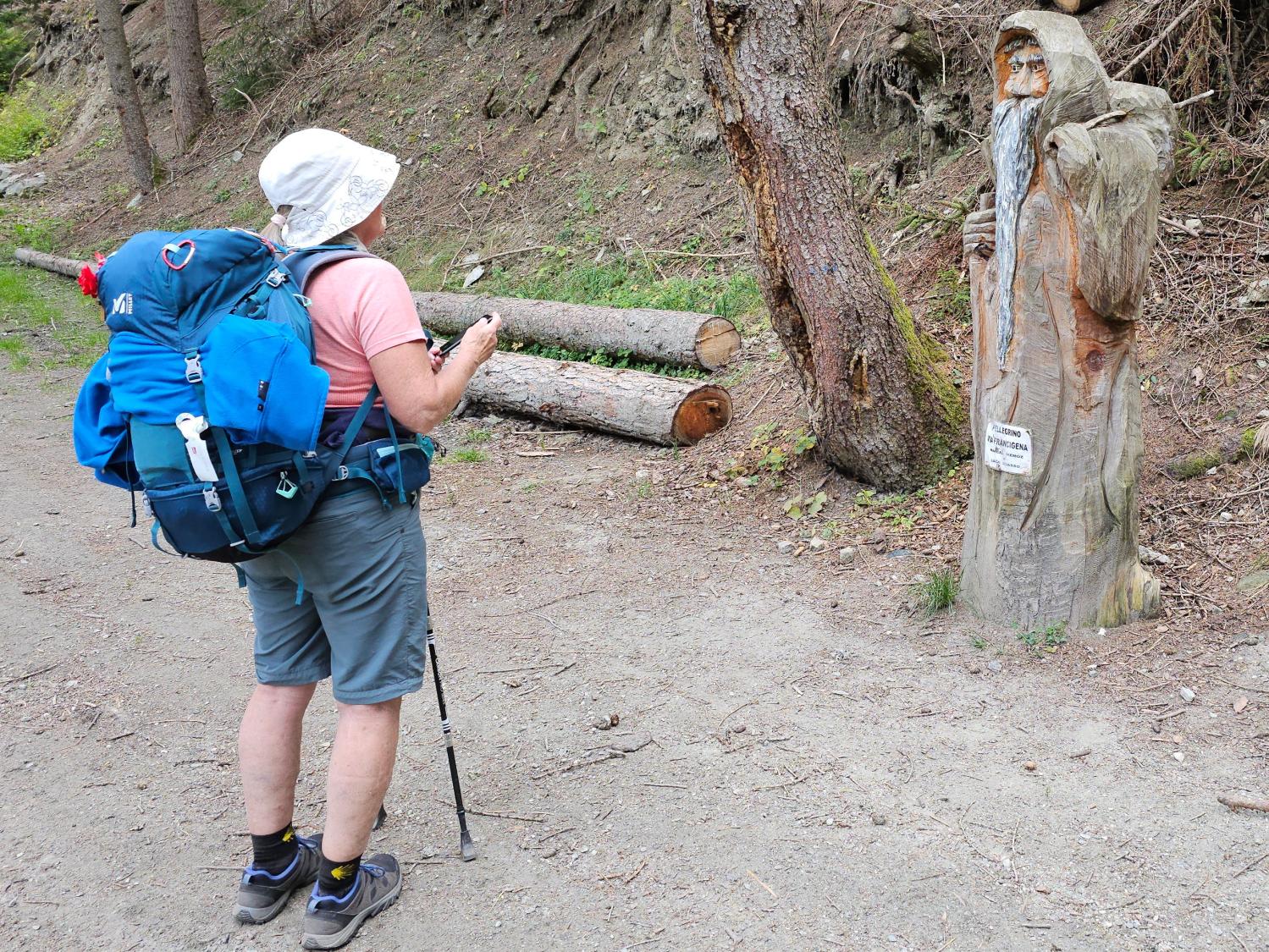
as well as a wooden carving of a Via Francigena pilgrim.
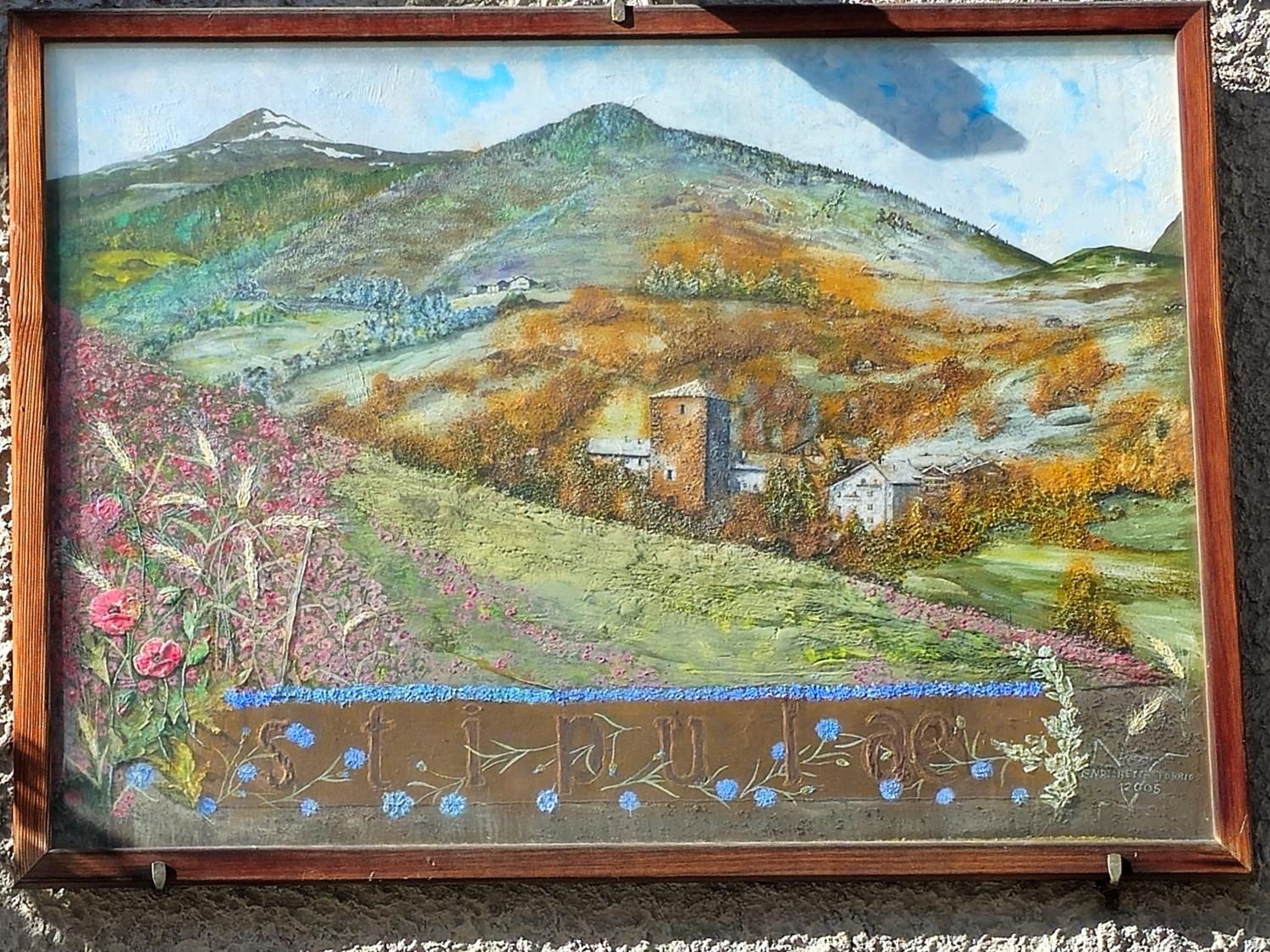
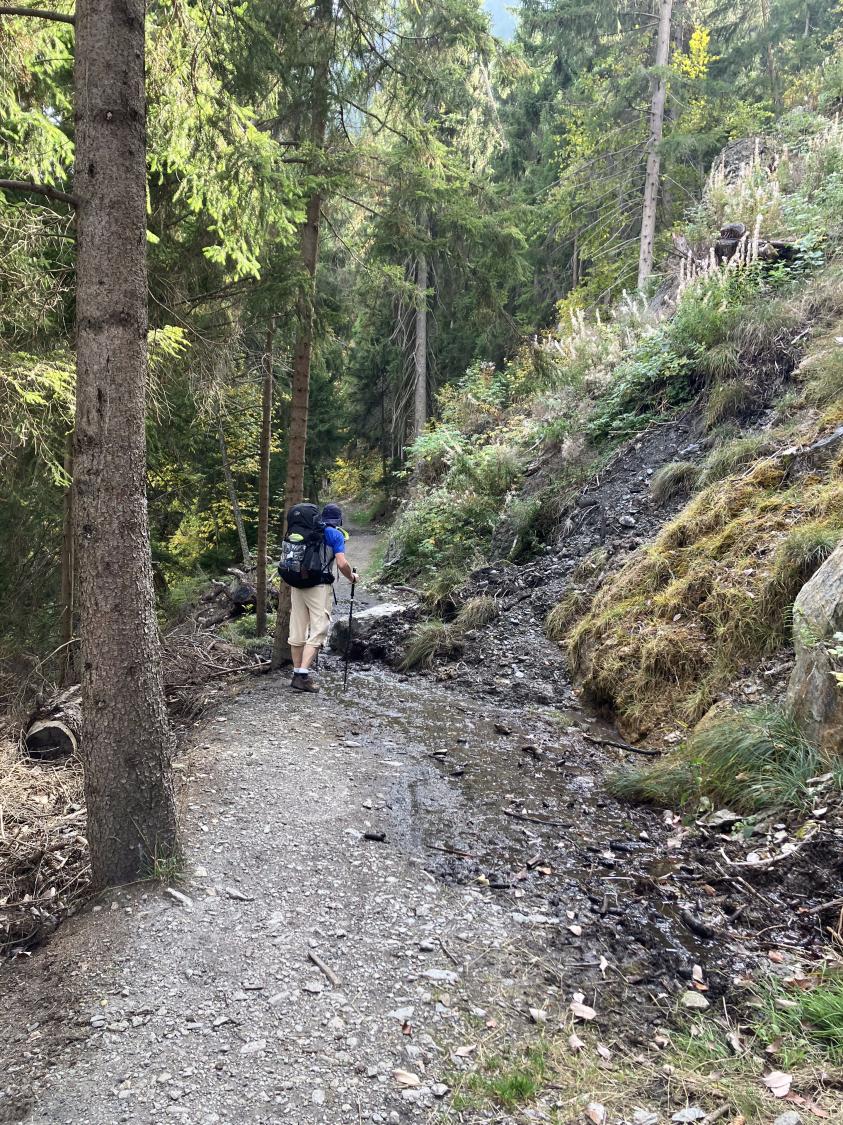
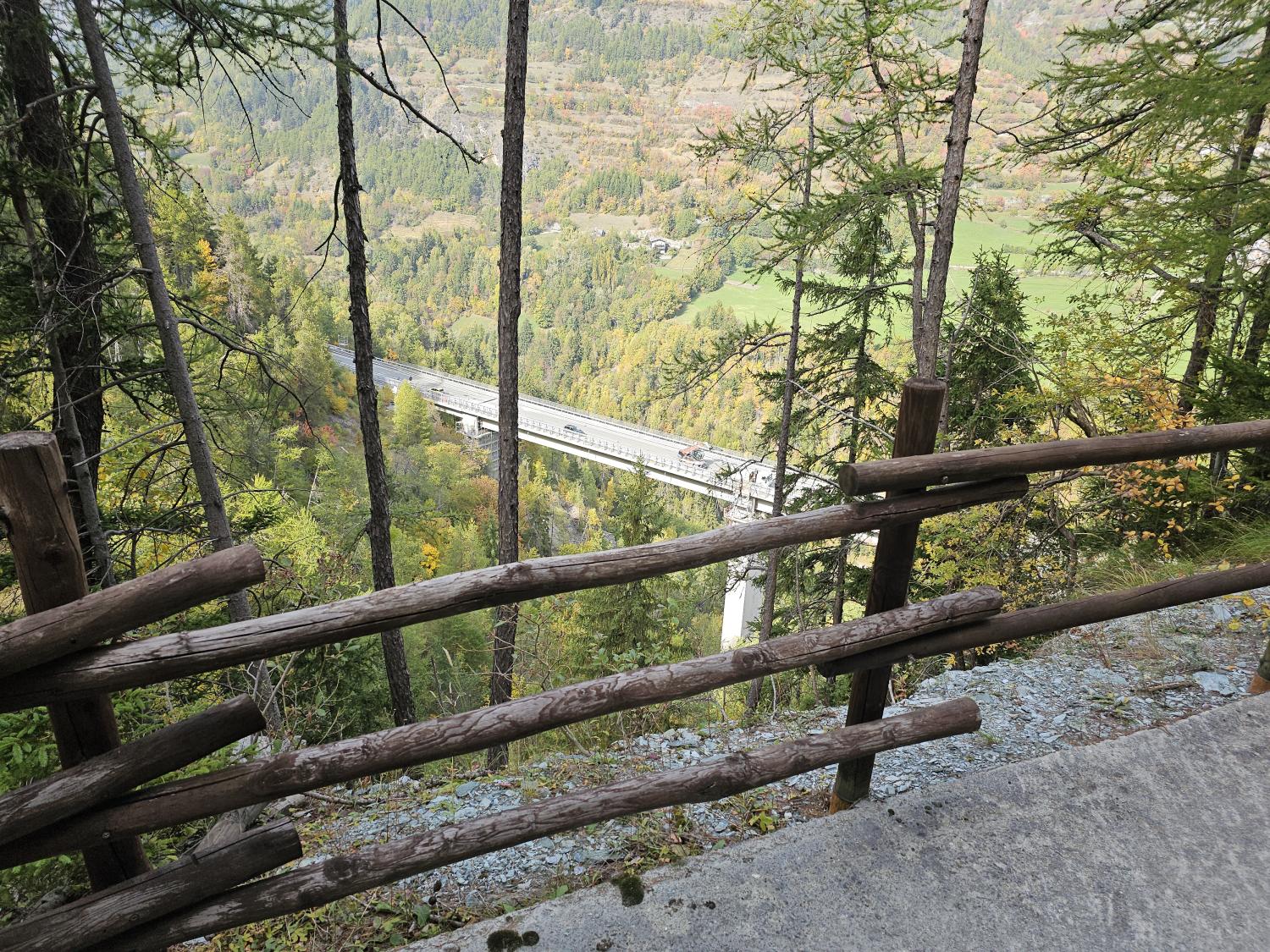
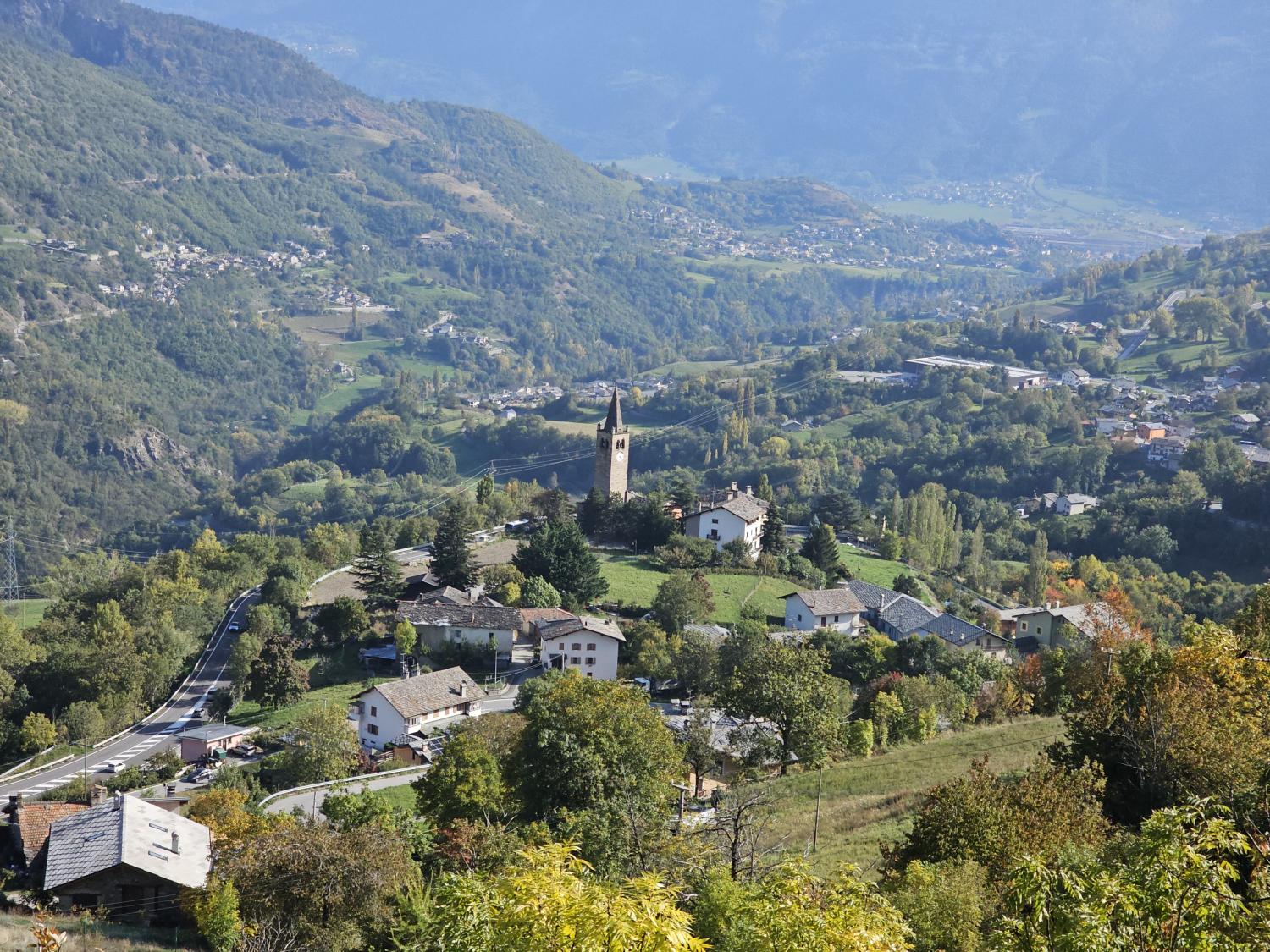
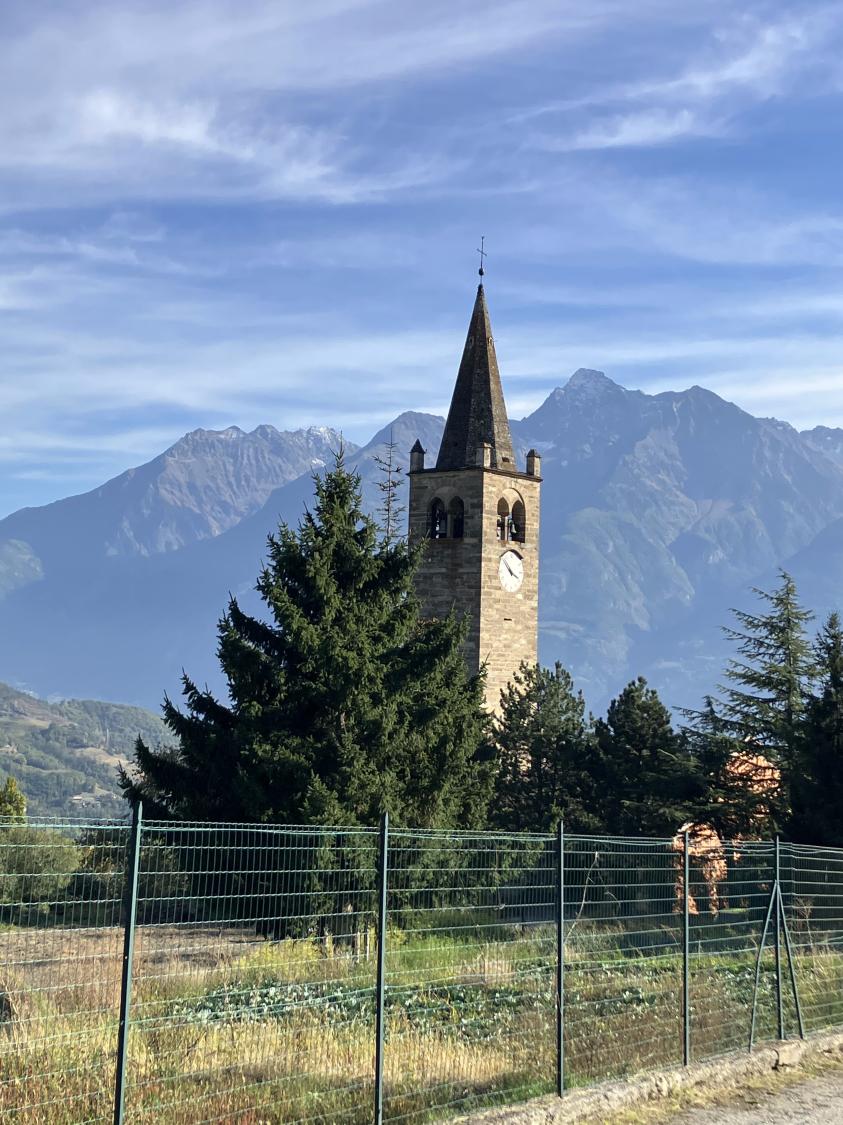
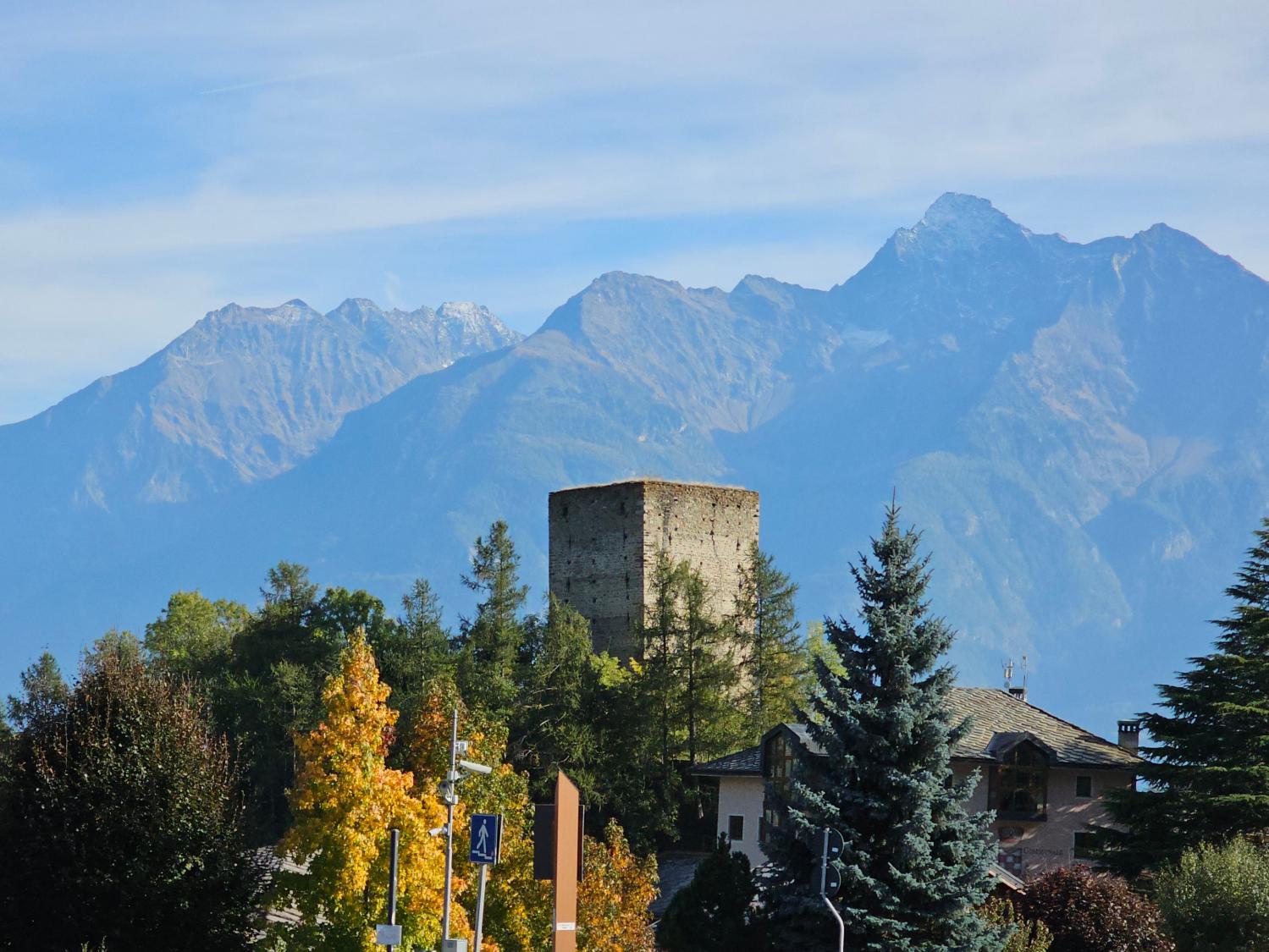
From there, we suddenly went steeply down to the village of Gignod with its imposing medaieval tower,
pausing at the church before continuing down to the hotel we had booked for the night.
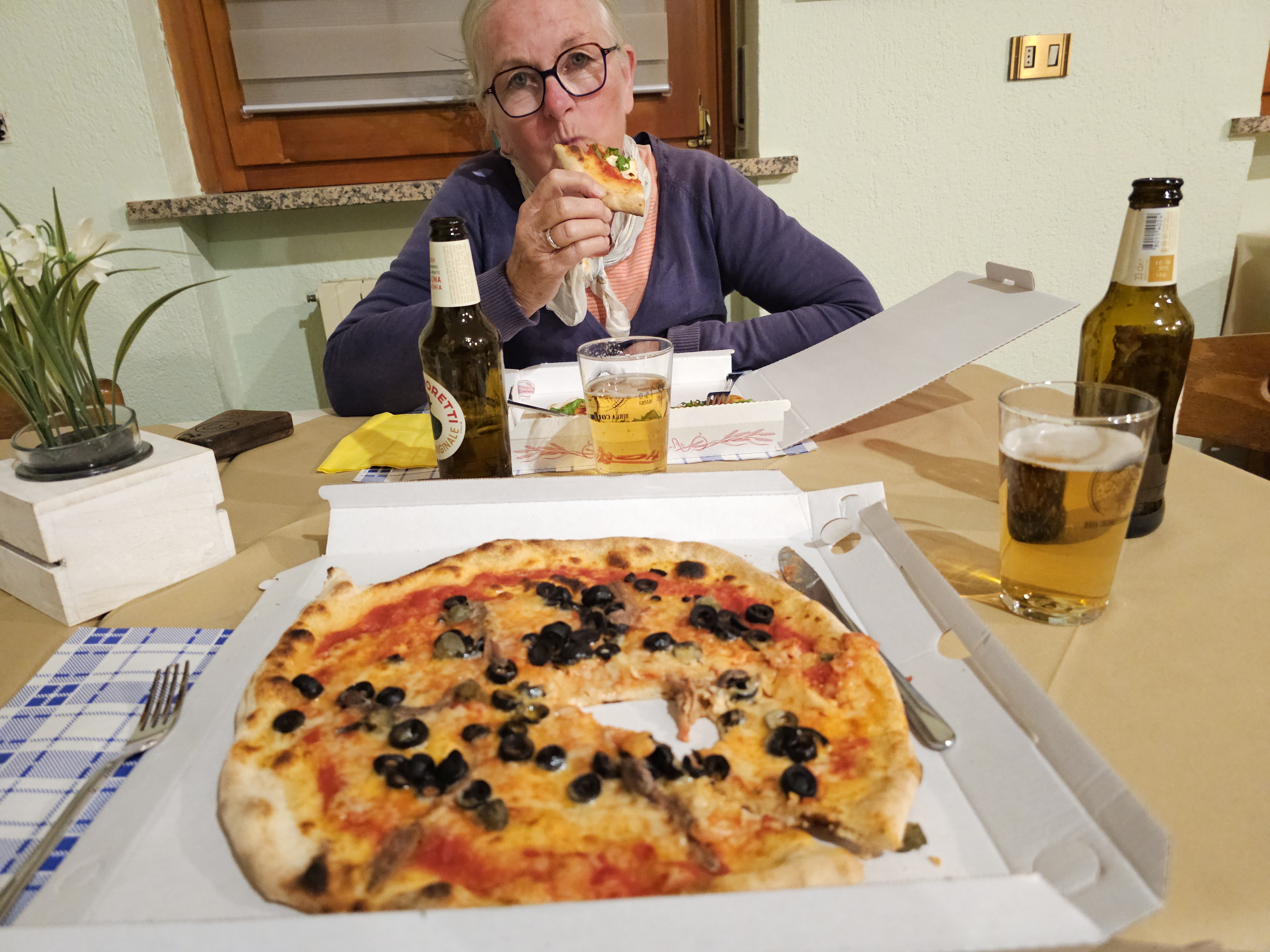
Here too, the restaurant was closed, but the friendly staff arranged to have a pizza delivered
which we could eat with a glass of beer in the reception / breakfast room.